









By Clint Thompson
Georgia Vidalia onion producers must guard against potential disease buildup following the recent barrage of cold weather.
Chris Tyson, University of Georgia Extension area onion agent at the Vidalia Onion & Vegetable Research Center in Lyons, Georgia, highlighted disease management in the UGA Vidalia Onion Blog.
“We’re always worried about disease this time of year, but the cold damage adds a little bit of increased risk for that. We’re just trying to be mindful of that and be aware of it,” Tyson said. “There are a few things in particular that we have to keep an extra eye out for. We may have to modify our spray programs a little bit to cover our bases so to speak.”
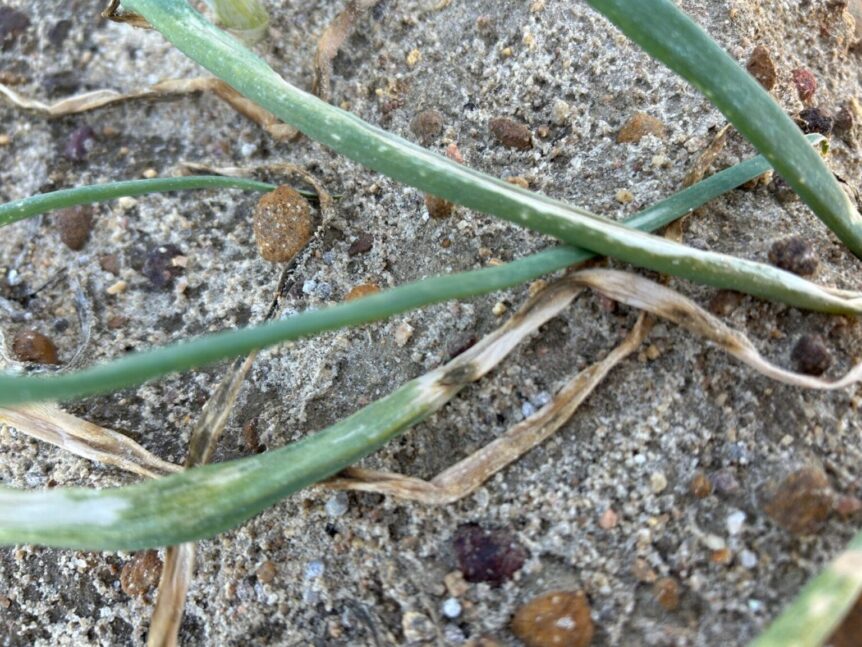
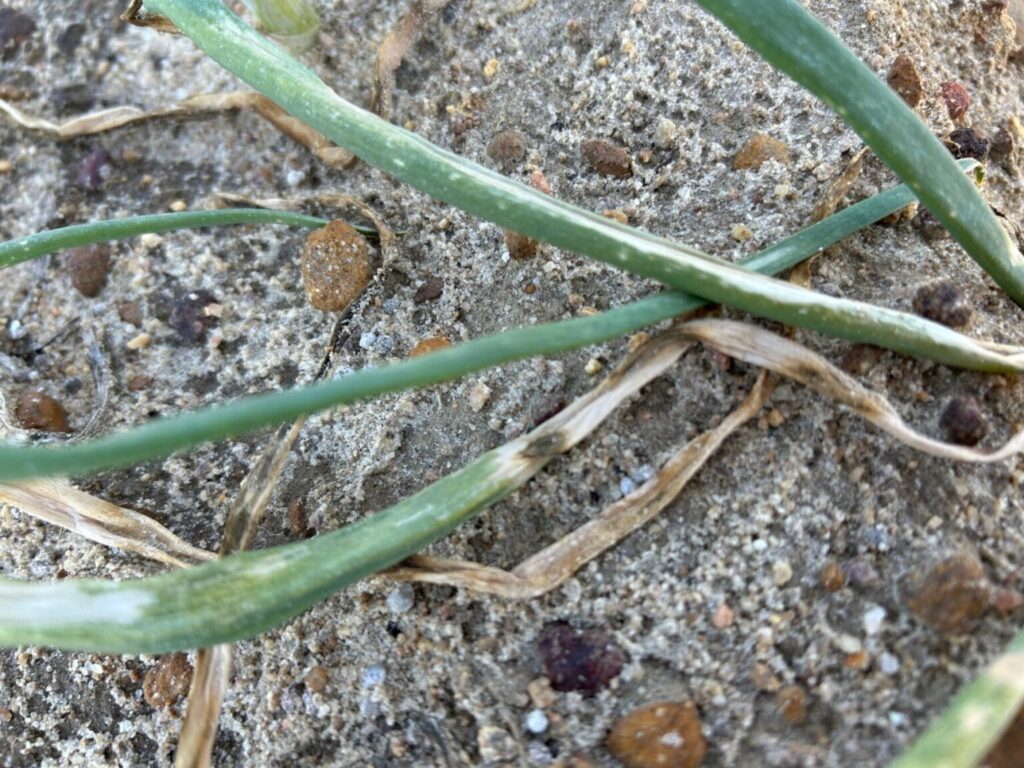
One concerning disease is Stemphyllium Leaf Blight. It is not normally an aggressive pathogen for onions, but that could change in the aftermath of persistent freeze events.
“Stemphyllium is actually a pretty weak pathogen, and it usually takes advantage of injured or dead tissue as an avenue to get into the plant. When we have foliar damage from cold, it puts us at a higher risk for (Stemphyllium),” Tyson said. “We’re seeing some out in the fields, probably more than what we would normally see just because we don’t normally see it this early. With the beat up foliage from the cold weather, we’re seeing more of it than we usually do.”
Fungicides
Fungicides with moderate efficacy include Luna Flex (depending on severity), Inspire Super, Aprovia Top, Miravis Prime, Elysis and Pristine. Omega 500 and Merivon have no efficacy.
“We’ve got good fungicides that we can use. Some growers may already be using them in their spray programs. Some may not,” Tyson said. “If they’re not, they probably want to consider using some of the better products just to give them some protection especially if they are seeing a little bit of injury from the cold.”
Yellowbud is a bacterial disease that producers should also watch out for.
“You’ll notice bright yellow colored foliage from newer growth. Often times, as the weather warms up, the plants will often overcome this disease with little to no implications,” Tyson wrote in the blog post. “Copper can help.”
Another bacterial disease to look out for is Bacterial Streak. It is favored by excessive nitrogen fertilization and rainfall during the cooler winter months, though cold injury to leaves can serve as an infection point.
“Using copper fungicides in your spray program will help,” Tyson added. “Weeds are a source of inoculum for this disease, so you may see this more in weedy areas.”