









By Clint Thompson
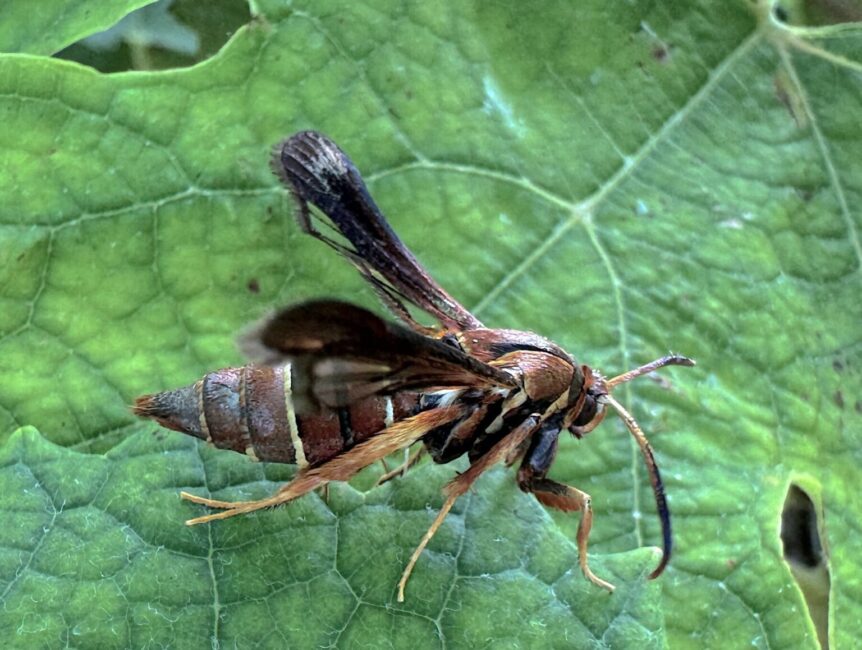
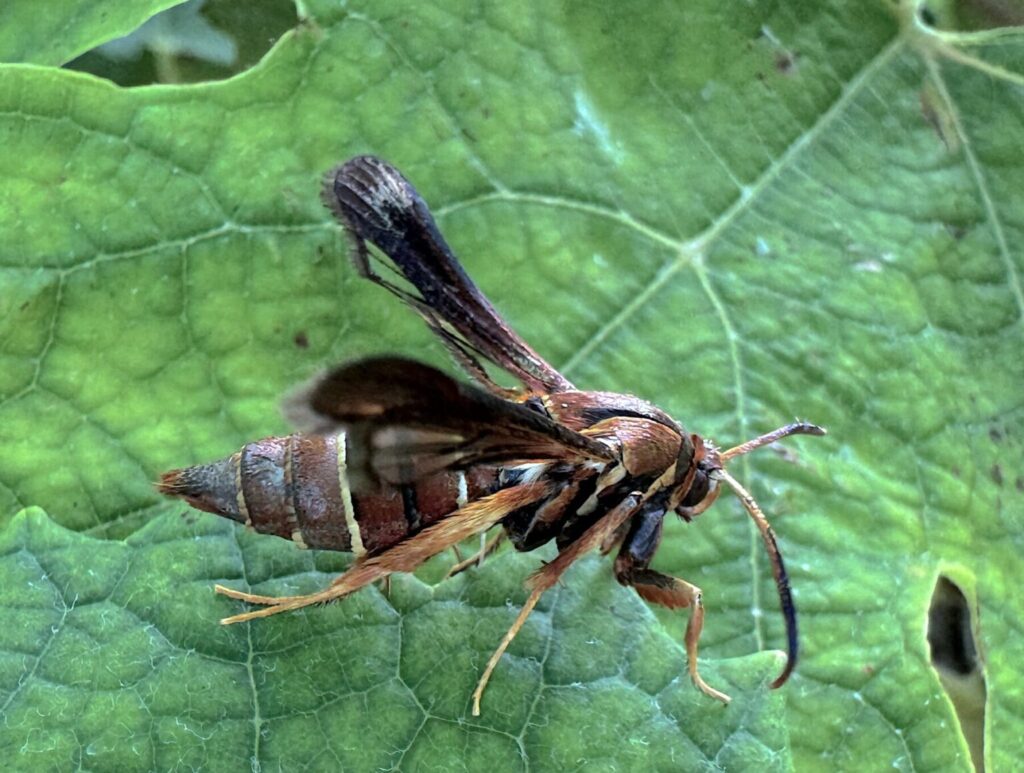
The time is now for Southeast grape producers to prepare for the initial emergence of grape root borer (GRB) adults. Brett Blaauw, assistant professor at the University of Georgia (UGA) College of Agricultural and Environmental Sciences, noted in the UGA Viticulture Blog that GRB adult activity starts to pick up in late June or early July.
Weed Suppression
One of the most effective ways is through weed suppression.

“These moths are looking for a nice safe place to lay their eggs. And the weeds provide a nice, like literal barrier, as well as kind of camouflage when they’re laying their eggs to help protect it from predators and from the environment,” Blaauw said. “And so having them in the shade below weeds can really protect those eggs and increases the survivability of the eggs that the females are laying. So, if you can get rid of all the weeds around the base of a vine, it reduces the good areas where the eggs can be laid.”
Entomopathogenic Nematodes
Another effective management option is through entomopathogenic nematodes, beneficial roundworms that can kill soil-dwelling insects. The nematodes can be applied with normal spray equipment as a drench to the base of the vines. Once in the soil, the nematodes will seek out and kill the GRB larvae.
“That’s one where applying it now, kind of like an insecticide, you apply it to the base of the vines, and it allows these little tiny, nearly microscopic roundworms to swim into the soil and seek out the larvae either in the roots or the ones that are near the soil pupating,” Blaauw said. “And so they are actively seeking out the grape root borer larvae to kill them.
“The biggest issue with them is that they require moisture. And on a hot, dry year where the soil dries out, the nematodes just can’t survive long enough to actually find the larvae to kill them. And if you use irrigation, that can help. If you keep the soil nice and moist with irrigation, that’s perfect. But I know not all growers use irrigation and then without irrigation, it becomes difficult to keep those nematodes alive.”
Mounding
Mounding is an alternative strategy that involves placing mounds of dirt around the base of each of the vines in mid-to-late June. This makes it difficult for the adults emerge from under the soil and also removes the main area for the females to lay eggs. Mounding can reduce adult emergence by up to 90%, but it is labor intensive.
“Mounding is one that it can work on, especially on a small scale,” Blaauw added. “On a large scale, the mounding is difficult because you have to basically push up soil around the base of the vine, every vine in the vineyard, basically creating a barrier for the adults that are emerging from their pupae. When they’re emerging, they crawl through the soil. And they can crawl and enter two in the soil, emerge and fly away. But if you put like 6 to 12 inches of soil on top of that, they can’t make it out.
“They basically can’t dig that far, and so they die. And so, on a small scale, you have to mound up that soil and then remove it after the end of the season and you’re good. So, for the homeowner, fantastic, but on a larger scale, I think it’s very difficult.”
Mating Disruption
Blaauw also touted mating disruption as an effective management strategy. Through pheromone-filled dispensers, mating disruption makes it difficult for males to find females to mate. Without mated females, there are no new larvae to attack the grape vines.
“The entire vineyard needs to be under mating disruption for at least two years,” Blaauw wrote. “But after two years of use, it is really effective at reducing the GRB within the vineyard.”