









By Clint Thompson
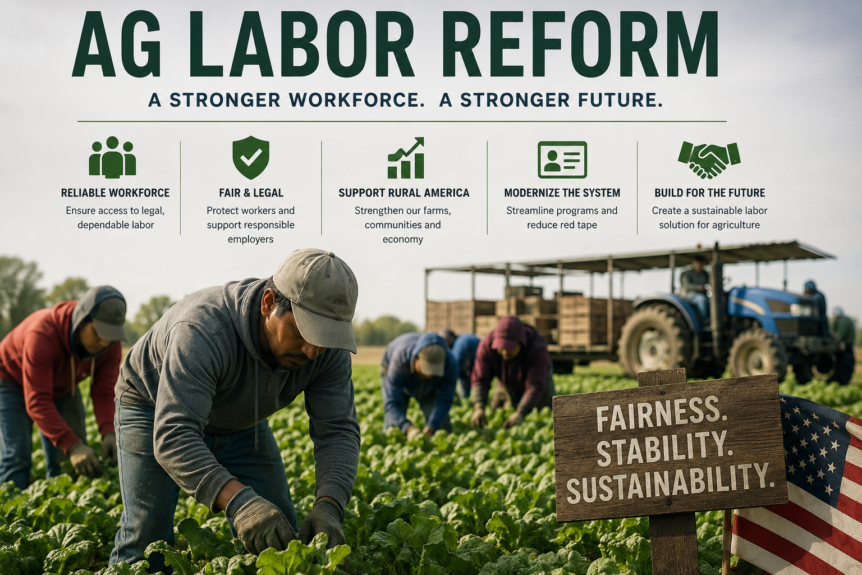
The Securing Agriculture’s Workforce Act of 2026 would improve accessibility and labor costs associated with the H-2A program. After 40 years, reform is needed to ensure long-term sustainability for farming operations across the Southeast, especially after the recent court ruling that reversed the Department of Labor’s (DOL) current AEWR methodology is unlawful.
John Hollay, president and CEO of the National Council of Agricultural Employers (NCAE), was part of a group panel at the recent Georgia Ag Labor Relations Forum held in Tifton on Aug. 25-26. The H-2A program was a focus of the two-day meeting.
Hollay answered a challenging question: Why shouldn’t specialty crop growers be optimistic that this is finally the year for reform?
“Well, I think if you look at the list of bills that Congress has actually passed and the president and signed into law this year, it’s a pretty slim number of bills. There’s no doubt that the legislative calendar is short between now and election day. And then obviously there’s the lame duck period. So, the options that are there are not many. And obviously you have a Congress which is dramatically divided at this point,” Hollay said.
Amnesty?
One of the main challenges to reform is amnesty within the bill. When discussions arise about H-2A and ag labor, it quickly gets wrapped up in the ongoing immigration debate. Hollay squelched any concerns that amnesty will result from this legislative reform.
“We have heard a tax on provision in the bill which would allow workers who are here, particularly those on operations that don’t have access to the H2A program; like your dairy farms, like your mushroom farms, to allow them to transition legally into the H2A program. Ideally, that’s what we want,” Hollay said. “We want to make sure that workers leave undocumented, improperly documented status and enter a legal status program. A tax where they’re calling this amnesty or comparing it to provisions that we’ve seen in past legislation like the Farm Workforce Modernization Act, which really was a pathway to citizenship, is completely different.
“But I think they’re using the general fear argument and frankly the lack of intimate kind of knowledge of the ag labor challenges that most people have. If you call something amnesty, people aren’t going to do their due diligence. This bill is completely different than what we’ve seen in past instances. And I think Chairman (GT) Thompson really took into consideration some of those concerns and that’s why he structured it the way he did.”