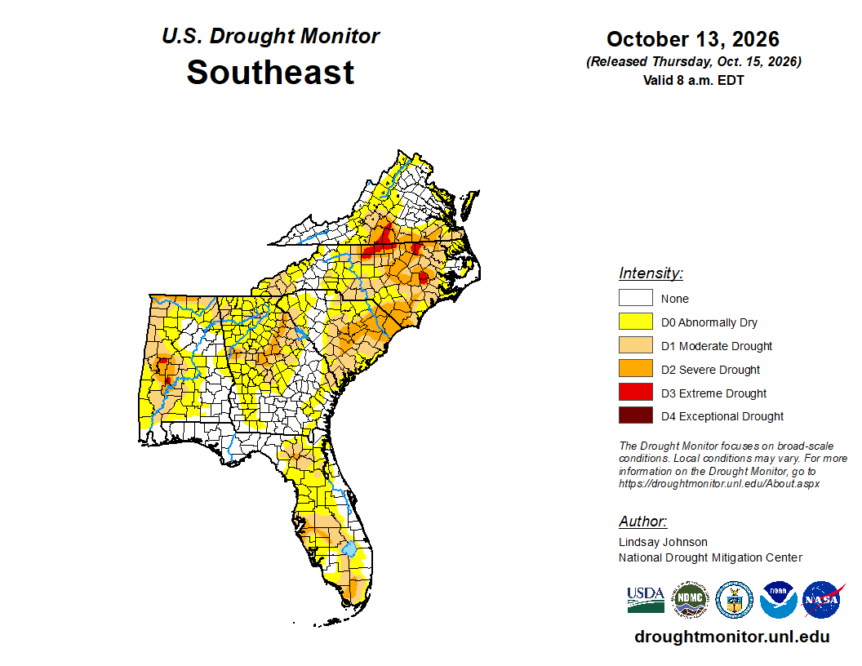
By Clint Thompson Alabama’s drought-like conditions are the driest in the southeast part of the state. It’s created challenging conditions for vegetable growers who have started the planting process for this season’s crops. Neil Kelly, Alabama regional Extension agent in Southeast Alabama, talked about the current drought. “It’s dry. If you’re on hard, stiff dirt, no we haven’t gotten that …
Alabama Peach Producers Hope to Avoid Late Season Freeze Event
By Clint Thompson Alabama peach growers have enough chill hours to make a crop this year. Now comes the hard part; avoiding a late-season freeze event that could devastate a crop. Edgar Vinson, assistant research professor and Extension specialist in the Department of Horticulture at Auburn University, discussed that unfortunate scenario with AgNet Media during the recent Alabama Fruit and …
House Ag Committee Announces Passage of H.R. 7567
By Clint Thompson The House Committee on Agriculture announced this week the passage of the H.R. 7567, Farm, Food and National Security Act of 2026 out of committee. House Committee on Agriculture Chairman Glenn Thompson (PA-15) addressed the bill’s importance following its passage: “Today, my colleagues at the House Committee on Agriculture stepped up for farm country and passed the …
North Florida Drought’s Impact on Watermelon Plantings
By Clint Thompson Extreme drought conditions are still prevalent throughout North Florida, expanding from the Panhandle all the way as far south as Citrus and Sumter counties, according to the U.S. Drought Monitor. They are challenging conditions for the watermelon producers in the Suwanee Valley who are beginning to plant this year’s crop. Bob Hochmuth, University of Florida Institute of …
Georgia Needs Management Plan for Citrus Greening
Citrus greening disease has yet to find its footing in Georgia’s commercial citrus. But if it does, Georgia’s growers need a plan in place to manage the disease. Lindy Savelle, executive director of the Georgia Citrus Association (GCA), emphasized that message during last week’s GCA annual meeting in Tifton. “There is a very small amount of the disease in commercial …
Georgia Hurricane Helene Block Grant Applications Open March 16
ATLANTA – Georgia Agriculture Commissioner Tyler J Harper announced this week that Georgia farmers, ranchers and foresters in eligible counties that have suffered losses in timber, infrastructure, poultry, beef cattle, dairy cattle, milk loss, dairy feed loss, pecans, blueberries, citrus, nursery, plasticulture and bare ground practices due to Hurricane Helene may apply for assistance through Georgia’s Hurricane Helene Block Grant Program. …
After Freeze, Ambrosia Beetles Are Potential Threat
Florida citrus growers should be on the lookout for an uncommon citrus pest following the recent freeze events that devastated crops throughout the state. During a recent postfreeze webinar hosted by the University of Florida Institute of Food and Agricultural Sciences Citrus Team, Lauren Diepenbrock, associate professor and entomologist, warned growers about the ambrosia beetle. This pest can prey on …
GFVGA Roundtable Discussion: Pleas Made for Permanent Change to AEWR
By Clint Thompson The Georgia Fruit and Vegetable Growers Association (GFVGA) helped host a roundtable discussion with legislators in Washington D.C. on Feb. 24. The issue, which was discussed among members with the Ag Wage Reform Coalition, centered on the H-2A program, specifically the adverse effect wage rate (AEWR). Sam Watson, president of the GFVGA, recapped the meeting and the …
SCFBA Co-Chair Commends Farm, Food and National Security Act of 2026
By Clint Thompson The Farm, Food and National Security Act of 2026 is hopefully the first step in a new farm bill being in place for the country’s farmers sooner rather than later. The Specialty Crop Farm Bill Alliance (SCFBA) applauded its release and how it addresses multiple needs pertinent to the fruit and vegetable industries. Kam Quarles, CEO of …
Peach Alert: Be Proactive in Managing San Jose Scale
By Clint Thompson Peach producers need to be proactive in guarding against San Jose scale, an annual pest that becomes a problem once temperatures start to warm up. “Once the insect gets out of control, it’s really hard to bring the populations back down. We just have a great environment for San Jose scale,” said Brett Blaauw, assistant professor at …