









By Clint Thompson
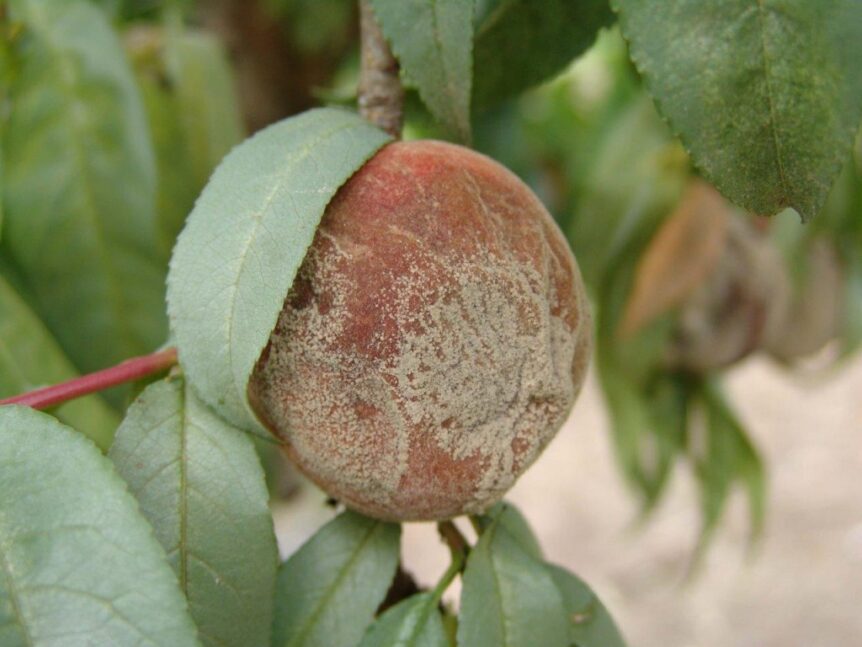
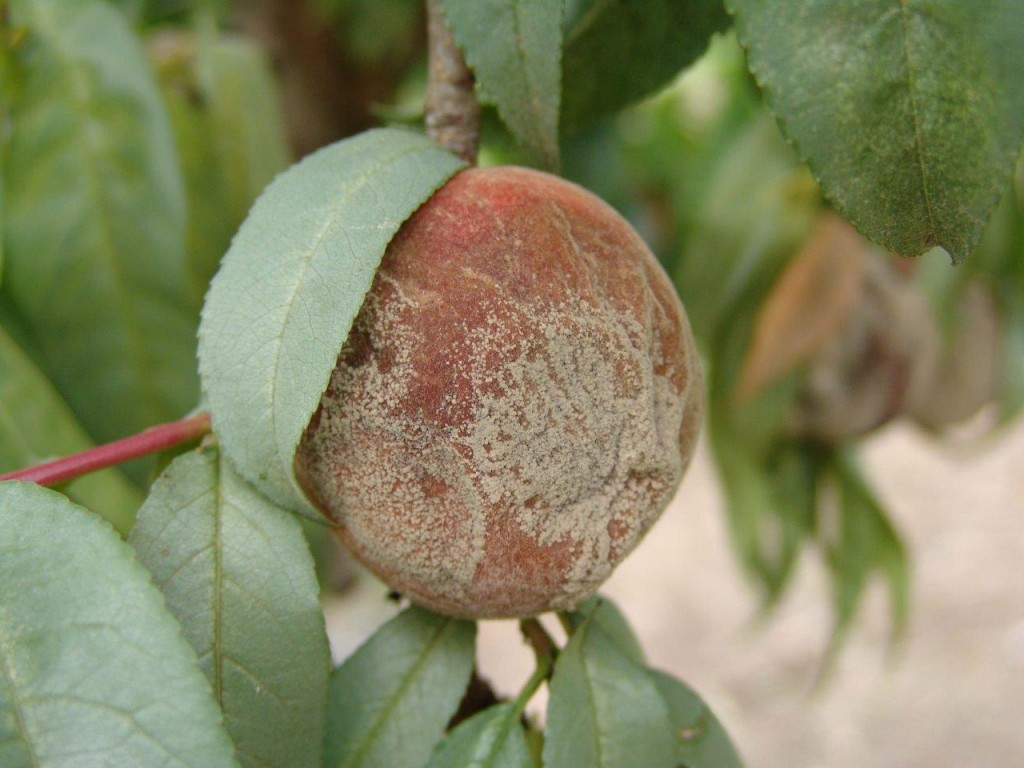
Brown rot disease is a concern every year for Southeast peach producers. If not for effective fungicides, the disease would have a far lasting impact on the region, says Phil Brannen, University of Georgia (UGA) Extension fruit disease specialist.
“Brown rot for us right now, I mean, it’s always a potential concern. Left to itself, it is the single worst disease we have,” Brannen said. “In a lot of years, if we didn’t spray a fungicide, we would have no peaches due to brown rot. A lot of homeowners actually experience that, because they don’t spray a lot of chemicals. Therefore, they have a lot of brown rot or not often very many peaches.”

Brannen said that if you look at the spores when brown rot is present, it is almost like a talcum powder. The breeze will blow it everywhere, and rain will splash it everywhere.
“It just covers an orchard very rapidly; even a very limited number of fruit or blossoms that have the brown rot organism on it, it will just spread everywhere. And then with moisture, it just develops very rapidly,” Brannen said. “You also have multiple cycles of it. You can start out, get an infection of peach early in the season or get the infection in the blossoms and then that just continues over and over and over. It has a pretty short disease cycle, and you can just build up populations of that pathogen that are just incredible.”
Resistance Concerns
With effective fungicides, there are always concerns of resistance developing, which is the case for some of the ones used in managing brown rot.
“The situation that we have right now is as of today, we can control it pretty well with the fungicides we have available,” Brannen noted. “We do have resistance in some fungicide categories or classes. We’re concerned about resistance developing in some of the other fungicides that remain, but we try to use good resistance management techniques.
“Left to itself, if we did not have fungicides, we really can’t grow peaches commercially in Georgia without fungicides.”