







By Clint Thompson To sell or not to sell. That is the current predicament facing pecan producers in Georgia and Alabama. With prices devastatingly low for growers, despite increased demand and diminished supply, farmers are facing a dilemma of whether to sell their crop right away or store it until the market improves. Lenny Wells, University of Georgia (UGA) Extension …
Specialty Crop Grower Magazine: Blueberry Varieties in Demand
By Frank Giles The Southeast has become a major production area for blueberries, thanks to strong breeding programs at land grant universities in key states. Here’s a look at several popular, new and under-development varieties from those breeding programs. University of Florida/Breeding Team Lead: Patricio Munoz Sentinel Sentinel is a vigorous, early-season, high-yielding cultivar with no known disease issues, although …
Specialty Crop Grower Magazine: A Conversation About the Farm Bill
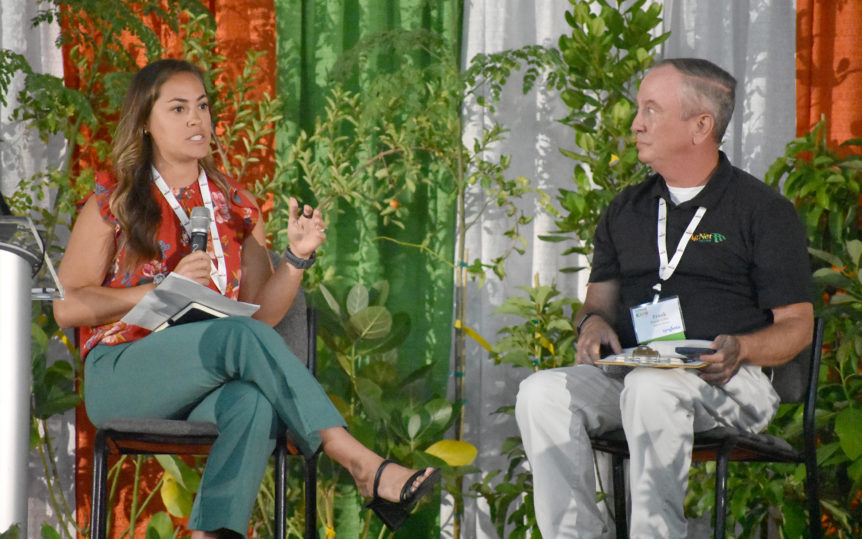
By Frank Giles There have been a few issues percolating on the federal policy front over the summer. One of the biggest has been the new farm bill and its prospects of getting passed into law. Last month, AgNet Media hosted the Citrus & Specialty Crop Expo in Tampa at the Florida State Fairgrounds. The event was a success, and …
Pricing Produce Directly to Consumers: Farmers Urged to Know Costs
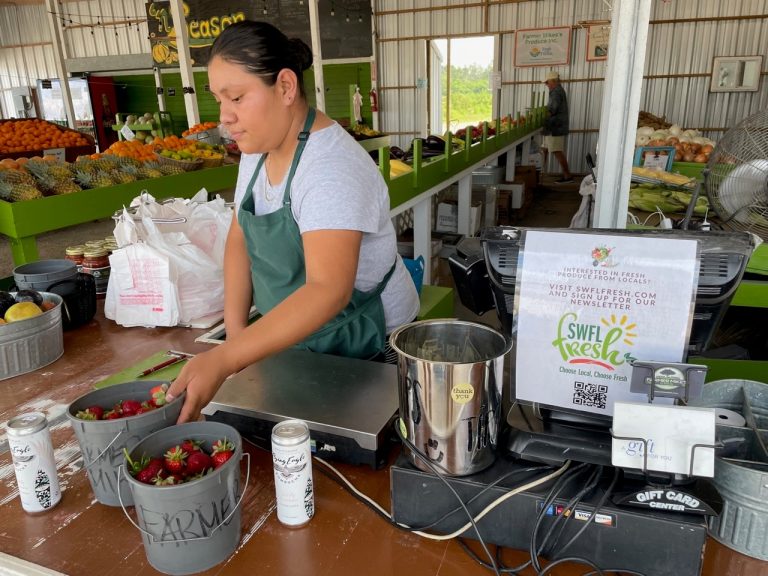
Instead of taking what the broker or retailer feels like paying, small- and medium-sized farmers who sell directly to consumers should track costs, determine what they want to earn and set their own produce prices, University of Florida Institute of Food and Agricultural Sciences (UF/IFAS) experts say. Growers should base their prices on their costs, said Kim Morgan, a UF/IFAS …
Specialty Crop Grower Magazine: The Last Word
By Michael Schadler Suspension Agreement Purgatory The never-ending story of the United States-Mexico Tomato Suspension Agreement added a new chapter over the last year when the Florida Tomato Exchange (FTE) issued a request to the Biden administration to terminate the 28-year-old agreement. So far, FTE has received no response. The Tomato Suspension Agreement is an agreement between the U.S. Department …
Here’s What Happened: North Florida Watermelon Season Recap
By Clint Thompson Georgia’s delayed start to the watermelon season was North Florida’s gain for a second year in a row. Bob Hochmuth, University of Florida Institute of Food and Agricultural Sciences (UF/IFAS) Regional Specialized Extension agent in Live Oak, Florida, confirmed last week that some of his growers were still picking over fields, mostly because Georgia volume had not …
Specialty Crop Grower Magazine: The Last Word
Promotion and Protection of South Carolina Peaches Swaying in the balmy breezes coming off of the Atlantic Ocean are the trees South Carolina is known for — not palmetto trees, but peach trees. While Georgia may be known as the Peach State, South Carolina is actually the nation’s second-largest peach producer after California. South Carolina harvests more than 200 million …
Strengthening Farms, Businesses: USDA Invests in Domestic Fertilizer Projects
CASCO, Wis. – U.S. Department of Agriculture (USDA) Secretary Tom Vilsack announced last week that the USDA is investing in domestic fertilizer projects to strengthen competition for U.S. farmers, ranchers and agricultural producers. This funding advances President Biden’s Investing in America agenda to grow the nation’s economy from the middle out and bottom up. It will create jobs and spur …
Specialty Crop Grower Magazine: More Efforts to Reform H-2A Underway
By Frank Giles There’s never a shortage of news when it comes to the H-2A visa program, which Southeastern specialty crop growers have come to rely on for labor. It is the go-to program for farmers who need larger numbers of employees to grow and harvest crops. But in an environment where inflation has pushed up the prices of just …
Florida Blueberry Producers Enjoying ‘Good Production’
By Clint Thompson Florida blueberry growers have enjoyed a prosperous season so far, though that prosperity could come to a halt once neighboring states start harvesting their crop. That could soon be the case, explains Doug Phillips, University of Florida Institute of Food and Agricultural Sciences (UF/IFAS) blueberry Extension coordinator. “I think it’s been good production. A number of folks …