









Photo courtesy of UGA
By Clint Thompson
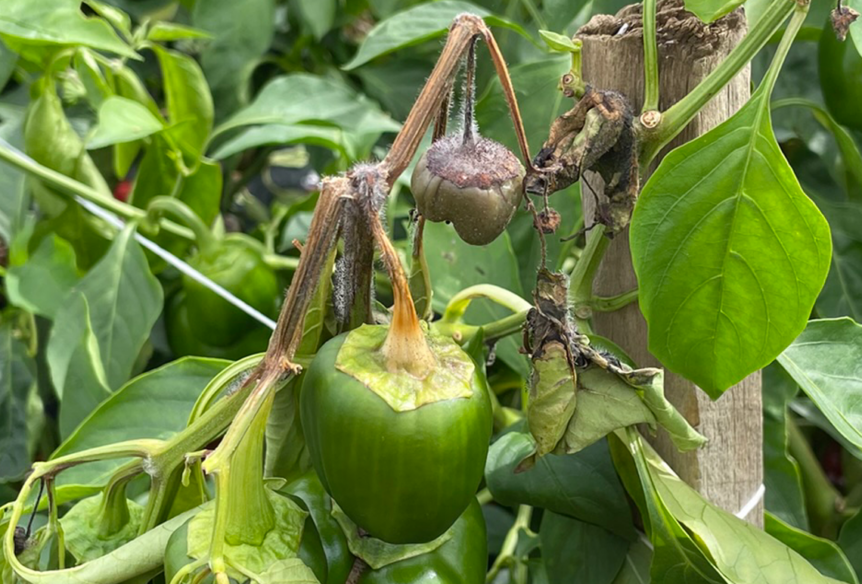
Choanephora rot is a fungal disease that causes a soft, wet rot on plants. It thrives in warm, humid conditions and is recognized by a fuzzy, “hairy” or pinhead-like fungal growth on infected areas.
Where Is It?
Choanephora rot is native to tropical and subtropical Asia and parts of Africa. The disease was first documented in the United States in Florida in the early 1900s in squash. Squash is a common host for this pathogen throughout the Southeast.
The disease is rare on pepper, but Bhabesh Dutta, University of Georgia (UGA) Extension vegetable plant pathologist, recently said it has been observed on Georgia peppers. This has raised concern among growers.
“We have seen very little in pepper before, but it has become a problem this year,” Dutta said.
Choanephora rot also impacts brassica seedlings in greenhouses.
Why Is It Important?
Disease symptoms can occur irrespective of the growth stage of the plant. Dutta said it can lead to death of young pepper seedlings or infect mature plants and fruits.
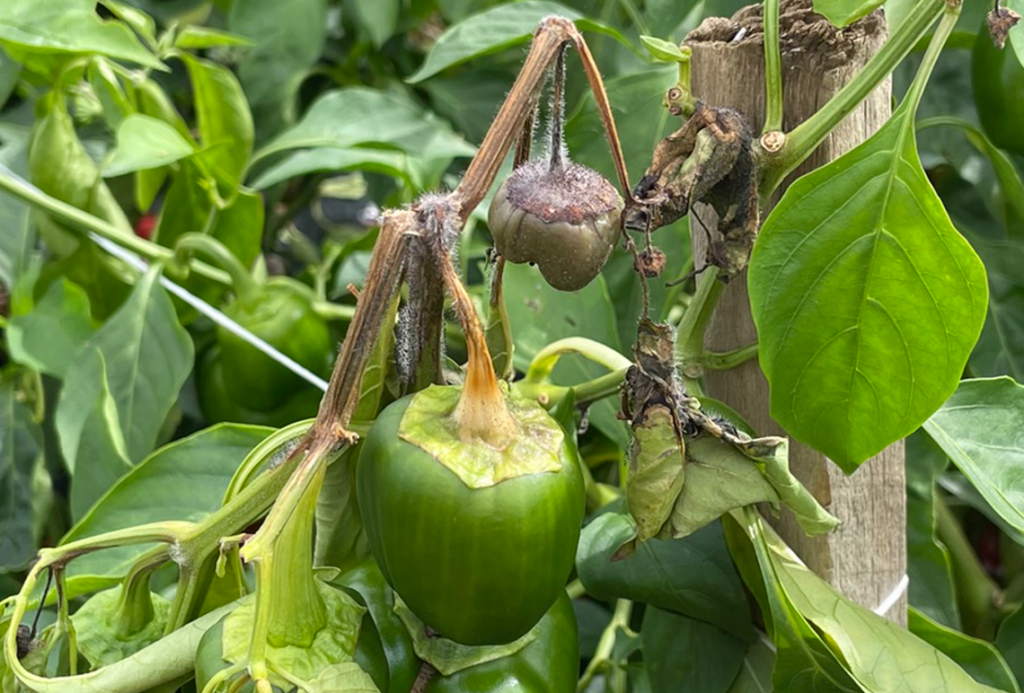
Symptoms often begin on senescing blossoms and spread rapidly to developing fruit. Infected fruits develop mushy, water-soaked lesions that quickly enlarge and cause fruit rot resulting in considerable losses. It also appears as black, fuzzy growth on top of the fruit with profuse sporulation, leading to fruit rot. The “hairy” symptom helps in the identification of the disease.
In severe cases, the entire plant can be impacted, which could lead to complete plant death. Dutta’s team at UGA has encountered fields with more than 40% to 60% of the plants being impacted with this pathogen.
What Should You Do?
Vegetable growers should not panic as the disease could be a sporadic event on pepper. Removal of infected fruits may help. Removal of all plant residue at the end of the growing season may benefit the grower as well. Crop rotation with non-host plants can help reduce soilborne inoculum and limit the persistence of Choanephora rot in the field.
Improving air circulation within the canopy by using wider row spacing can lower humidity around plants and make conditions less favorable for disease development. Finally, avoiding overhead irrigation is recommended, since this practice can facilitate the dispersal of spores from infected to healthy plants.
UGA researchers have observed that except for a couple of fungicides that are labeled on pepper, none had any efficacy on Choanephora. Lab, greenhouse and field trials are currently being conducted at UGA to understand the biology of the pathogen and assess fungicide options for pepper growers.
Dutta’s lab at the University of Georgia is actively investigating this emerging issue to support growers with data-driven recommendations. The lab is actively collecting isolates from pepper fields in Georgia and assessing their sensitivity to fungicides. Replicated field trials are also underway to evaluate the performance of both registered and experimental fungicides under natural conditions.
Prolonged dry weather this past June followed by an extended wet period in July and early August could have made the environment favorable for disease development. Because the pathogen depends on high humidity and prolonged wetness, weather patterns play a critical role.