









By Frank Giles
In 1862, President Lincoln signed the Morrill Act into law. The legislation created the land-grant university system that was intended to teach about farming practices and serve agriculture. That mission continues to this day, and you see land-grant universities in the Southeast cited often in this magazine.
Those institutions have played a vital role in the advancement of farming, but sometimes the research intended to help growers misses the mark. Working for an agricultural trade publication, I sometimes hear from growers when this occurs.
It can be frustrating, but why does this occur? There can be a number of reasons, but often it is a disconnect between the institution and the stakeholders it serves. That can be driven by a lack of communication between the two groups.
Communication is critical in developing research that hits the mark and serves a beneficial purpose for growers. It is refreshing to see farmers and land-grant scientists being proactive about the direction of research.
A good example of this is how Florida blueberry growers have worked closely with the University of Florida Institute of Food and Agricultural Sciences (UF/IFAS) to prioritize research objectives.
Last year, the Florida Blueberry Growers Association (FBGA) began consultations with UF/IFAS to develop a program to direct funding toward research priorities. This year, the project will be rolled out with $400,000 secured from various royalties to fund projects.
Priorities
The FBGA research committee and UF/IFAS developed five research priority areas:
1) Cultivar improvement
2) Pest and disease management (chilli thrips)
3) Horticultural practices
4) Biological and organic options
5) Pollination studies
While those sound like broad areas, the FBGA provided more detail about the specific needs under each category.
Requests for proposals should go out this month. Each proposal will be scored on various factors, but the No. 1 factor will be: Does this address a grower need or problem? The process got delayed some by the freeze earlier this year, but the hope is to have the projects awarded and funds distributed by May.
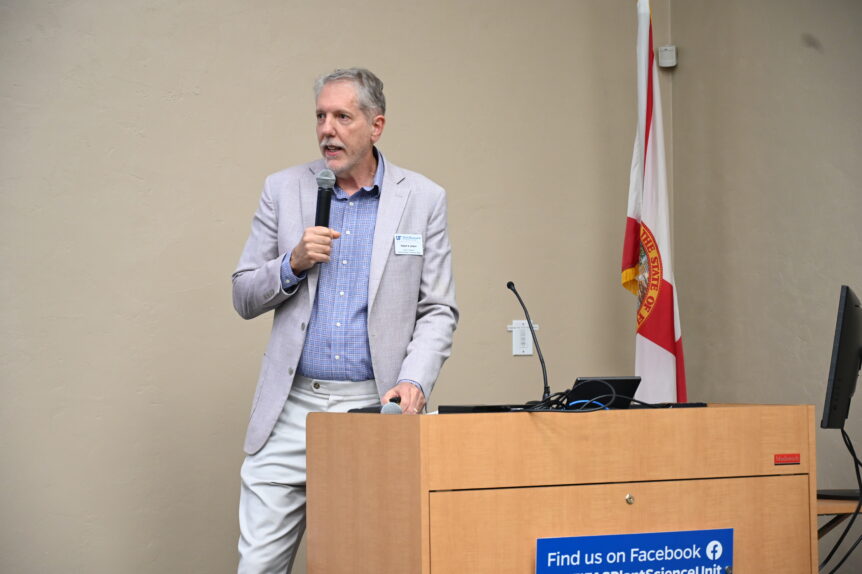
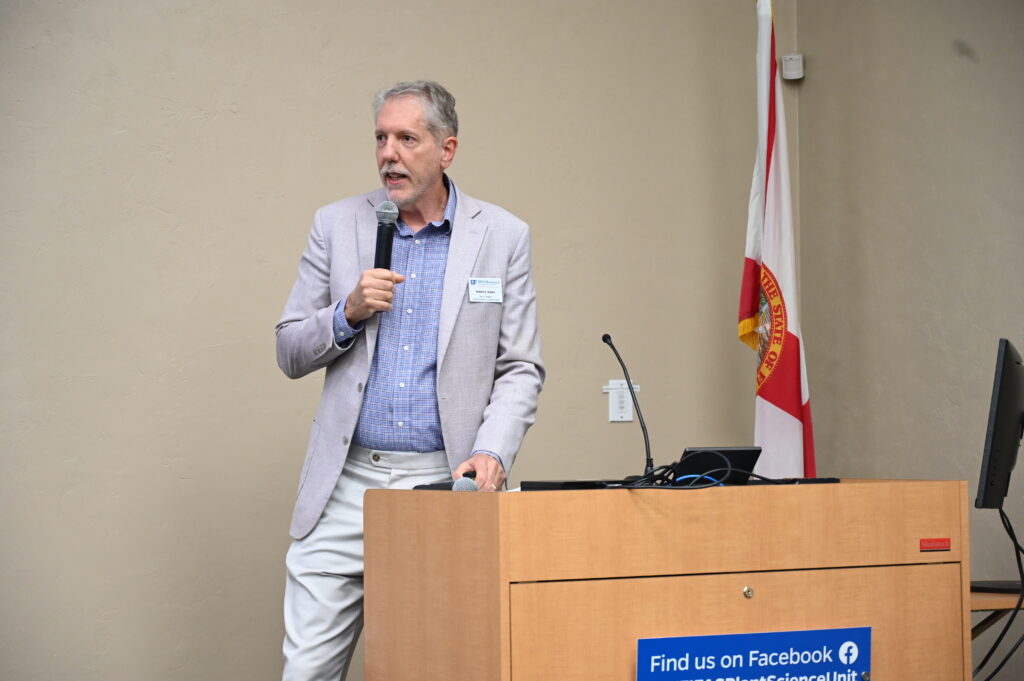
While this is not a new concept, it is good to see it in action and the engagement between growers and researchers. Rob Gilbert, UF/IFAS dean of research, updated growers on the program during the recent FBGA Spring Meeting and Field Tour.
Speaking of engagement, the FBGA grower meetings are a great example of this, and the spring event was no exception. There are few meetings that I attend where the growers are so engaged in the educational program, which is presented mostly by UF/IFAS researchers.
The growers are not shy about asking the researchers smart questions throughout their presentations. I suspect for the researchers it can feel a bit like being in the hot seat. But the growers are respectful, asking pointed questions about how information presented will address issues on their farms.
This kind of collaboration makes both parties better and will hopefully lead to Florida blueberry growers becoming more productive and profitable.
Video
Click here for video component.