









By Clint Thompson
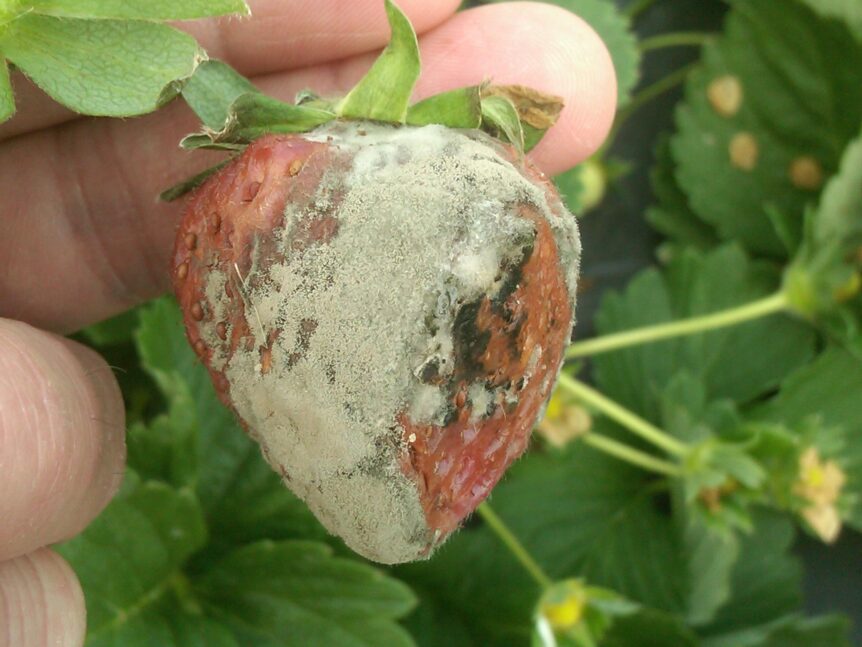
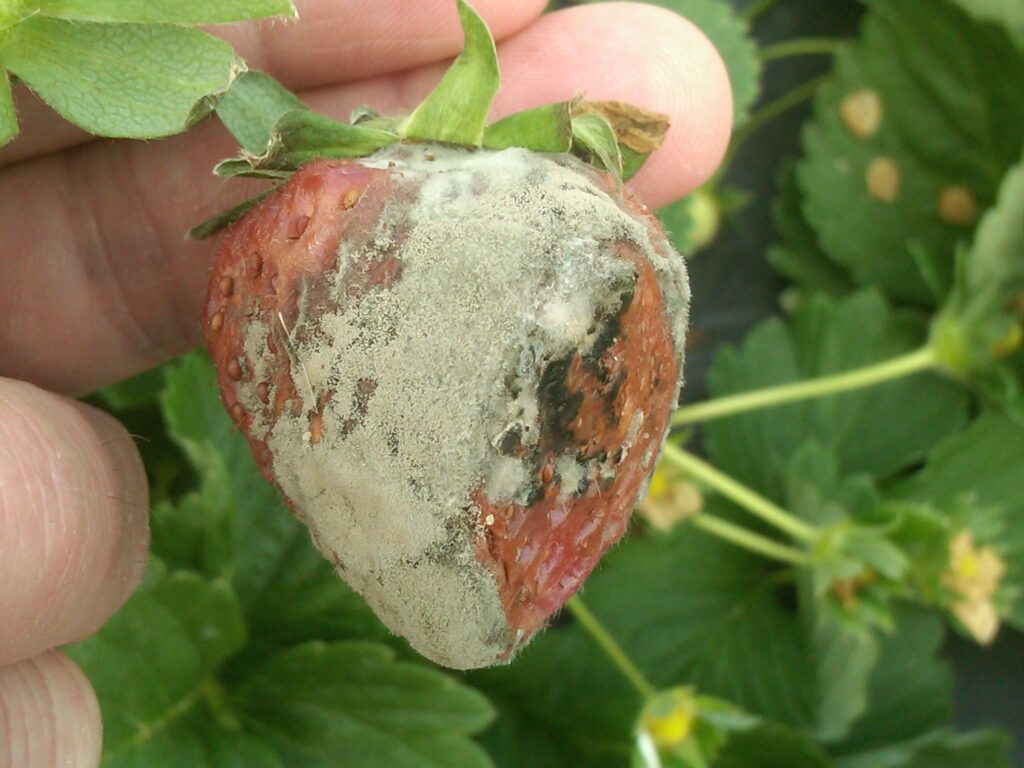
Botrytis disease is an annual problem for Southeast strawberry producers. It is even more problematic since it has developed resistance to the newer fungicides that the growers utilize. That leaves farmers to depend on older fungicides to manage botrytis, according to Phil Brannen, University of Georgia (UGA) Cooperative Extension fruit disease specialist.

“It’s a challenge for many reasons. We could generally do a pretty good job of controlling it, again, with good fungicides,” Brannen said. “The problem with botrytis is outside of Captan and Thiram, which are kind of the old fungicides that don’t develop resistance, all of the newer fungicides, botrytis is just really good at developing resistance.
“We’ve had some botrytis isolates that we’ve gotten in Georgia that have had resistance to five or more fungicide classes. So, the fungicides just don’t work anymore. It’s a challenge for us to keep up with that. As far as controlling it, we generally do a pretty good job.”
According to the University of Florida Institute of Food and Agricultural Sciences (UF/IFAS), botrytis fruit rot is also known as gray mold and considered one of the most important diseases of strawberries in Florida. Infections that start in the field continue to develop during storage and transit at refrigeration temperatures.