









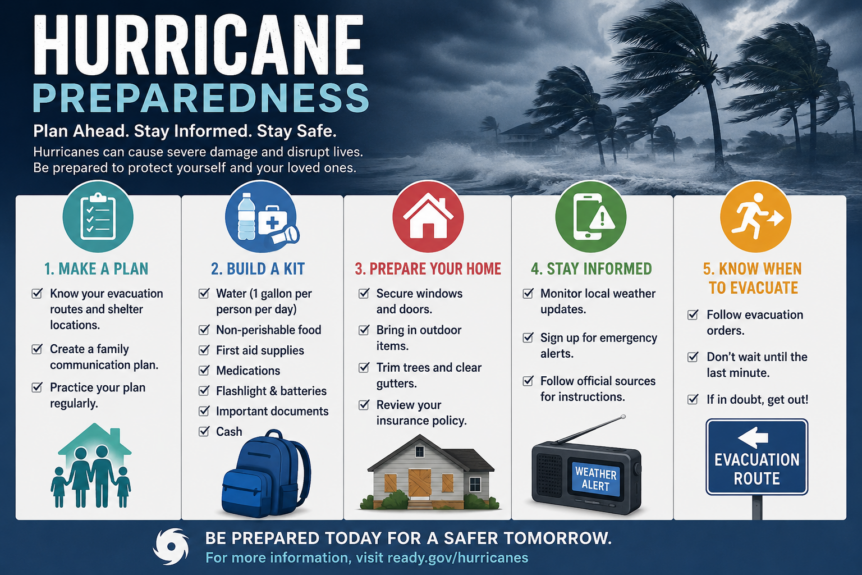
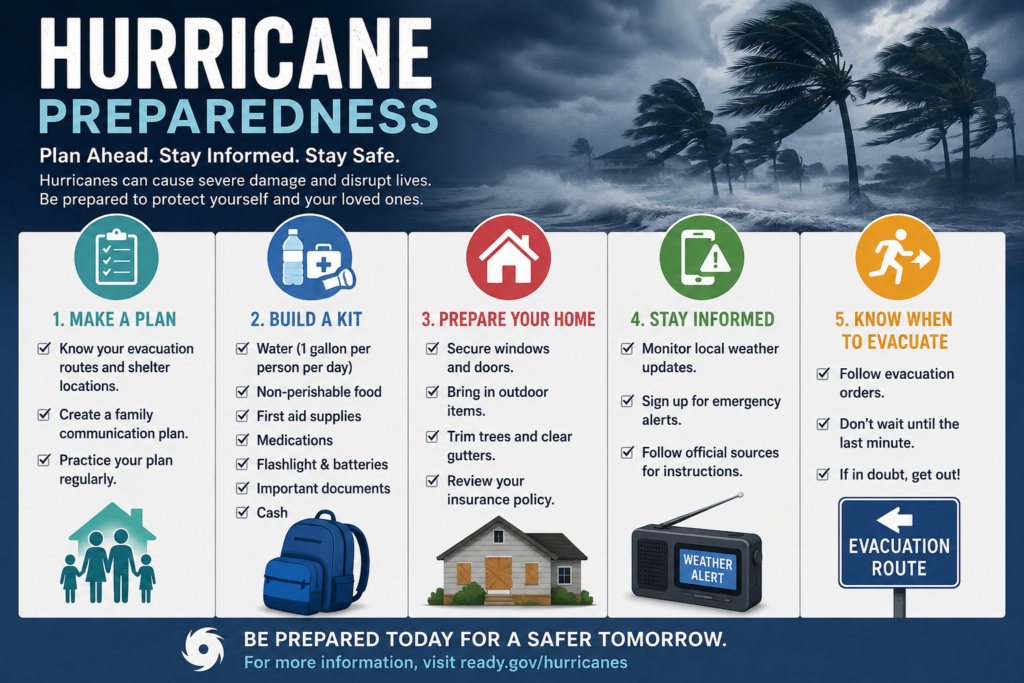
Hurricane season officially began on June 1. The U.S. Department of Agriculture (USDA) is imploring producers to stay prepared for potential impacts and explore recovery resources.
Be Prepared
Growers should protect their families and production operations. This includes:
- Develop an emergency plan. Make sure employees and family members know the plan, including meeting points and alternate evacuation routes in the event of infrastructure damage.
- Remove debris and secure large objects. Minimize the presence of equipment, supplies and debris that could be launched during high winds or submerged in floodwaters.
- Document inventory and secure important records. Documentation is critical for insurance compensation and recovery assistance. An inventory of farm buildings, vehicles, equipment and livestock is recommended.
- Know Your Insurance Options. Review insurance policies with your agent to be sure you have adequate coverage.
- Gather supplies. Have drinking water, canned food, generator, batteries, a flashlight and fuel available in case of lost power.
- Access real-time emergency information. Download the FEMA app for free on the App Store and Google Play for safety tips on how to proceed before, during and after disasters.
USDA Assistance for Hurricane Recovery
- The USDA Farm Service Agency, Natural Resources Conservation Service and Risk Management Agency (RMA) offer options to offset losses and help growers get back on their feet. Contact your local USDA Service Center to report losses.
- If you have risk protection through federal crop insurance, report crop damage to your crop insurance agent within 72 hours of discovering damage and follow up in writing within 15 days.
- For producers with coverage through RMA’s Hurricane Insurance Protection – Wind Index (HIP-WI) and Tropical Storm Option (TS), payments are generally made within weeks following a hurricane or tropical storm.
- If you have coverage under the Noninsured Crop Disaster Assistance Program (NAP), you should report crop damage to your local FSA office and file a Notice of Loss (CCC-576) within 15 days of the loss becoming apparent, except for hand-harvested crops, which should be reported within 72 hours.
- The Tree Assistance Program (TAP) provides cost-share assistance to replant or rehabilitate trees, bushes or vines lost during the natural disaster. TAP complements both NAP and crop insurance coverage, which often cover the crop but not the plants or trees.
- The Emergency Conservation Program (ECP) and Emergency Forest Restoration Program (EFRP) provide financial and technical assistance to restore conservation practices like fencing, damaged farmland or nonindustrial private forests. These programs are administered by FSA state and county committees and county offices. Producers should contact their local FSA county office regarding enrollment periods and eligibility.