









By Clint Thompson
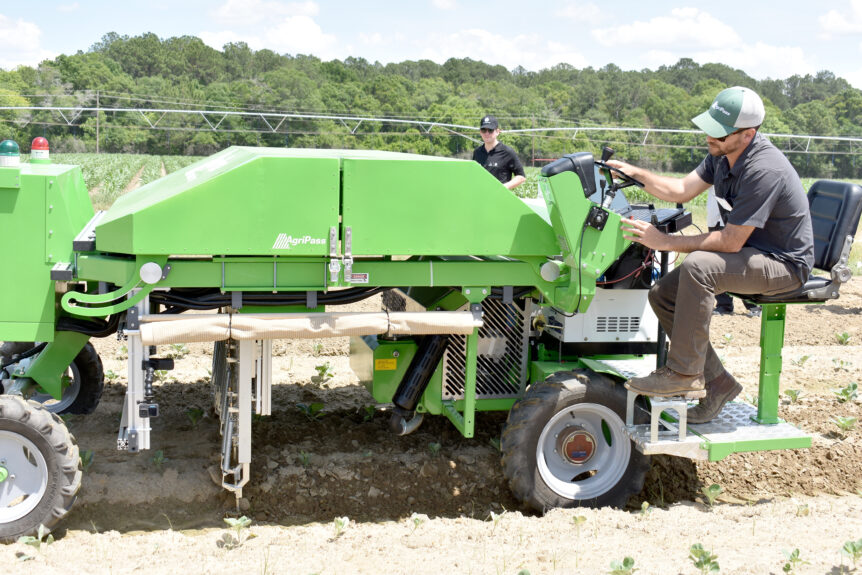
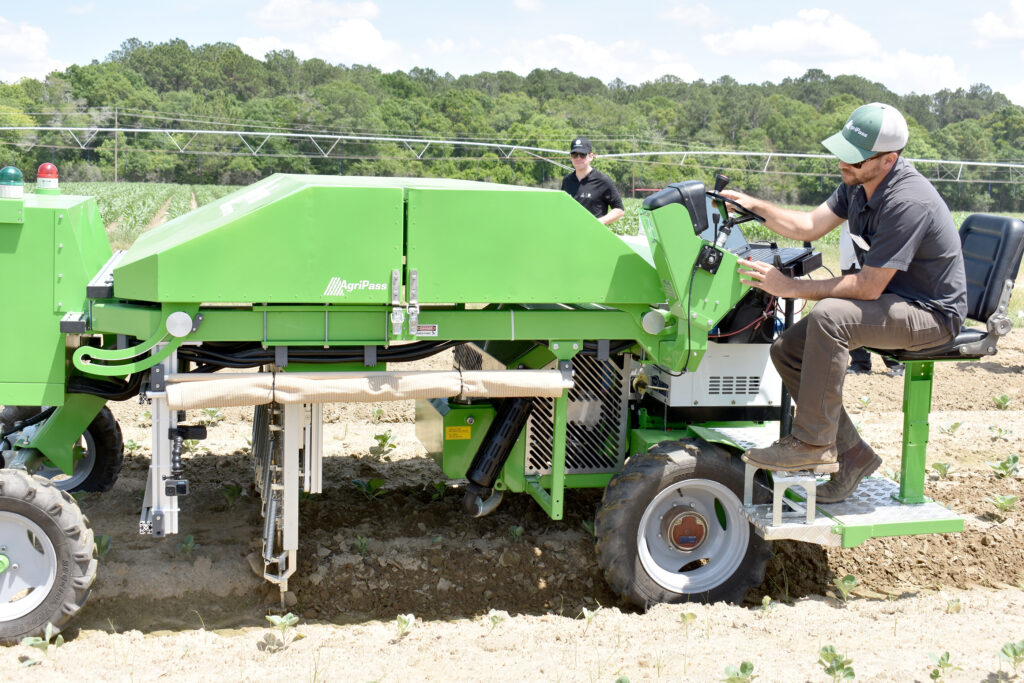
Laser weeders and mechanical weeders may one day have their place as viable options in weed management for farmers, but they should be utilized in an integrated program, says University of Georgia Extension weed scientist Stanley Culpepper.
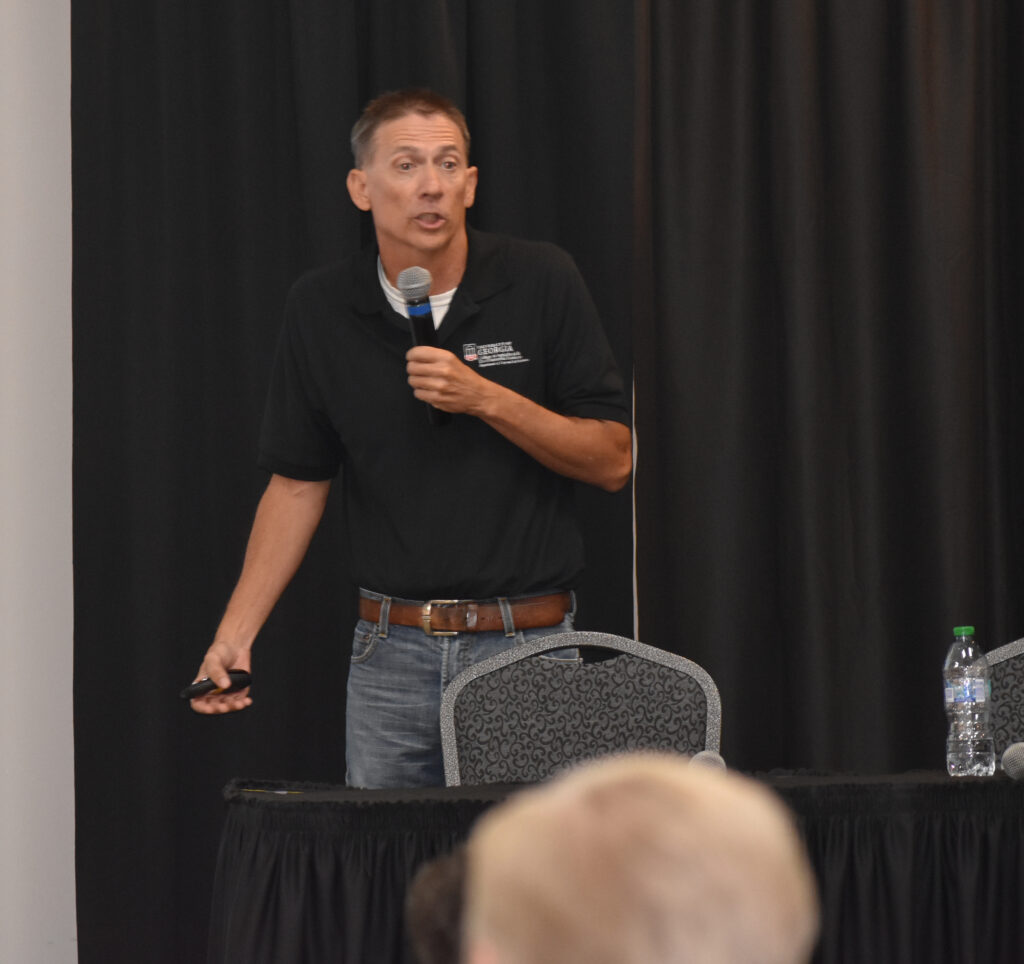
“The new tools and the new technologies, they’re certainly exciting, what they’re able to do, but I think it’s important to also highlight the backbone, the building blocks of weed management in our state which remains the herbicide program,” said Culpepper. “Right now, our farmers are smart enough to know you don’t just go out and spray herbicides. That’s not sustainable and it’s a very bad idea. So, we need to develop the integration (approach). So maybe it’s an herbicide program in the future plus a laser weeder or precision application device, right?”
Culpepper spoke at the Southeastern Specialty Crop Technology Conference at the University of Georgia Tifton Campus Conference Center in Tifton, Georgia, in early May. The two-day event featured presentations and field demonstrations that showcased technologies in action.
“I’ll tell you flat out, with our work, as much as I love these new technologies, the new technologies without the backbone of an herbicide program simply are not sustainable; not in our world,” Culpepper said. “Now, let’s stress, in California it may be different, but in South Georgia, North Florida, we’ve got to have the holistic dynamic approach.”
Cost Prohibitive?
Technological advancements are fascinating to think about but many of them may be cost prohibitive for growers needing to reduce expenses to remain sustainable. That’s why the future of ag production is still likely to include current management tactics.
“I’m not too far from retirement, but I’m dreaming from this world that I go back to the family farm and I can broadcast my residual herbicide, right? That kind of removes a lot of the stewardship concerns of off-target movement and stuff like that. And then the weeds that escape, I can send R2-D2 out there to zap them for me, right?” Culpepper said.
“But R2-D2 can’t do it alone. I’ve got to have the herbicide program. Let’s be honest, I need to eliminate, with the populations that we have, for most of these technologies, I probably need to eliminate 90% to 95% of the population from even being out there and then let R2-D2 go in and clean it up for me, right? I think that’s a more realistic approach. Otherwise, R2-D2 is going to be wore out in about a day with the populations we have in South Georgia, right?”