









By Clint Thompson
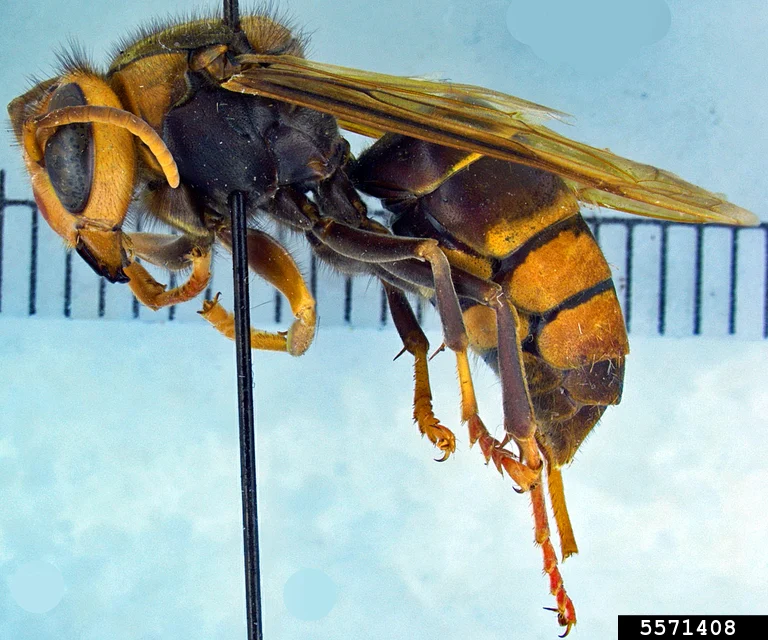
The ongoing threat of the yellow-legged hornet (YLH) to honey bee populations in the Southeast should concern the region’s fruit and vegetable producers, says University of Georgia Honey Bee Program Director Jamie Ellis.
“Honey bees are incredibly important providers of pollination services. Many of the crops grown in Georgia, for example, blueberries, watermelons, cucumbers, cantaloupes, squashes; are heavily pollinator dependent, and honey bees are very important to the production of those crops,” Ellis said.
While the invasive species was first confirmed in Georgia in 2023, it continues to be seen in the Southeast. The region’s departments of agriculture have been active in their efforts to destroy whatever nests they find, which have mostly been concentrated in the Savannah, Georgia area; along with South Carolina and North Carolina.
“At this point, as homeowners, farm workers, beekeepers, and other people are reporting hornet sitings because the news is getting out, they will submit reports to various department of ag websites. To date, the regulatory authorities who are finding and removing the nests seem to be doing it well enough to the point where we have not had widespread colony losses due to YLH predation,” Ellis said.
Hawking Hunting Strategy
That’s not to say it can’t happen, however. The hornets use a “hawking” hunting strategy where they hover outside a beehive and feed on bees in flight.
“There is an interesting side effect to this ‘hawking’ behavior. The bees seem to be able to tell that they are being predated. The colonies almost stop flying,” Ellis said. “We call this foraging paralysis where there are enough hornets hunting in the apiary that the bees just quit flying. Not only are these hornets eating bees, but they also disrupt colony activity. Bees must fly to collect nectar to make honey and to collect pollen to pollinate crops. Georgia’s honey production and crop pollination industries are incredibly important. From that area of Georgia, you get one of the most premium honeys in the world – tupelo honey.
“The hornets can cause pollination issues. They can cause honey production issues. There are a lot of trickle-down impacts caused by this pest.”
While departments of ag have helped curtail the hornets’ threat, farmers and homeowners can ill-afford to let their guards down. People are asked to report the hornet immediately if they observe it.
“If you see a suspicious nest or insect, my first recommendation is to take a picture from a safe distance and submit the corresponding information through the Georgia Department of Agriculture website,” Ellis said.