









By Clint Thompson
Peach management this year changed quickly in the last few weeks. The drought to start the year reduced disease buildup in orchards in Georgia and Alabama. However, with the recent increase in rainfall, bacterial spot disease is starting to spike in untreated peaches.
Phil Brannen, University of Georgia Cooperative Extension fruit disease specialist, noted the development in a recent UGA Peach Blog post.
“On the peaches that are treated with the antibiotics and the copper and stuff like that, we’re doing fine. From that perspective, so far so good. But where we have untreated peaches in our trial, they’re just decimated. I hope it doesn’t get worse,” Brannen said. “Definitely, if you had not sprayed you would have a problem.
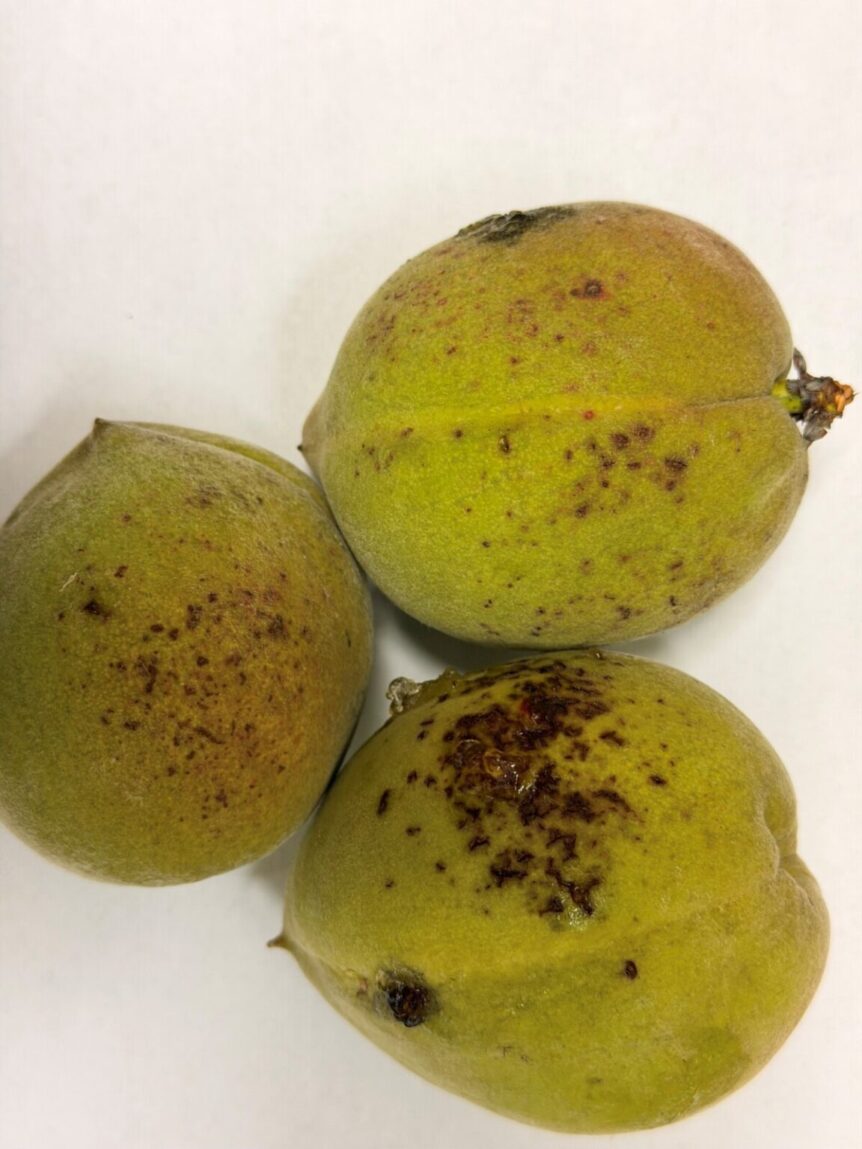
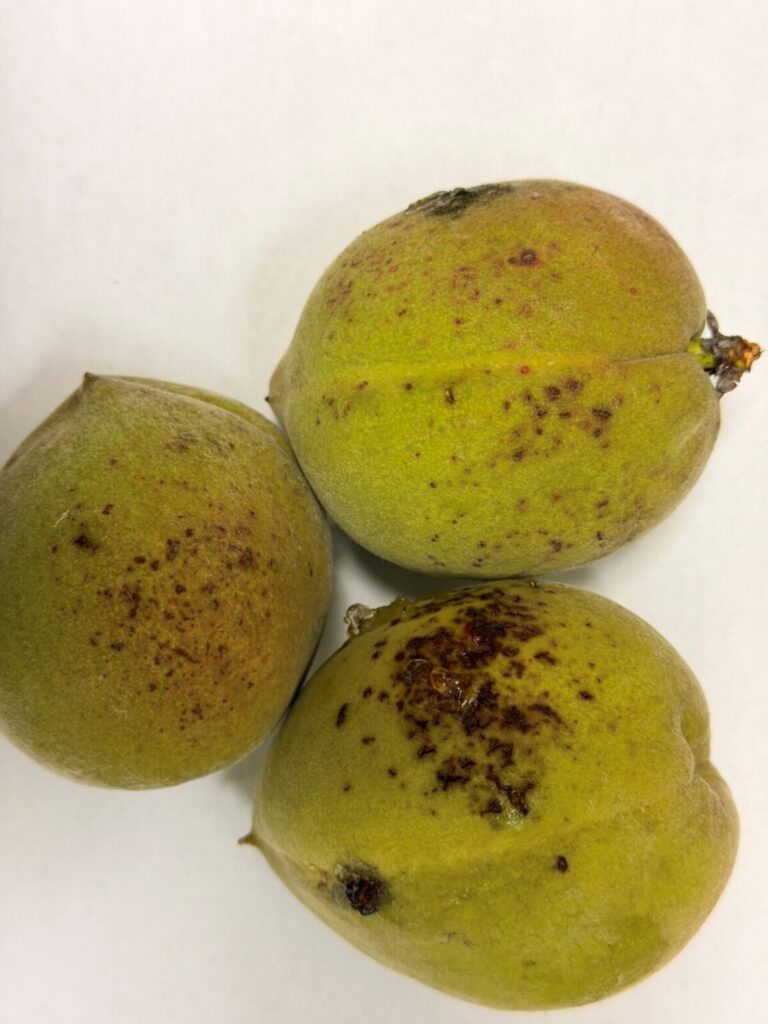
“In the one place where we have a research trial with the grower, he left three rows of untreated O. Henry (variety) which is extremely susceptible to bacterial spot. There’s not a single fruit that doesn’t have it and have it severely. The leaves are starting to get defoliated as well. That just gives you an example of what could happen.”
Disease Background
Bacterial spot is a sporadic leaf-spot disease that can cause defoliation in certain cultivars. Spots can also appear on the fruit, causing damage and leaving fruit unmarketable. The disease thrives in rainy conditions, which have been more prevalent this summer compared to the dry spring. Bacterial spot could worsen if the rains continue.
“Now, if we get enough rain going into the next month to month and a half, if it were to continue to rain, it becomes very difficult to control bacterial spot. I know we’re going to have it. We’re going to have some of it. And so that’s just a fact. But hopefully it won’t be that bad if they continue to spray,” Brannen said.