









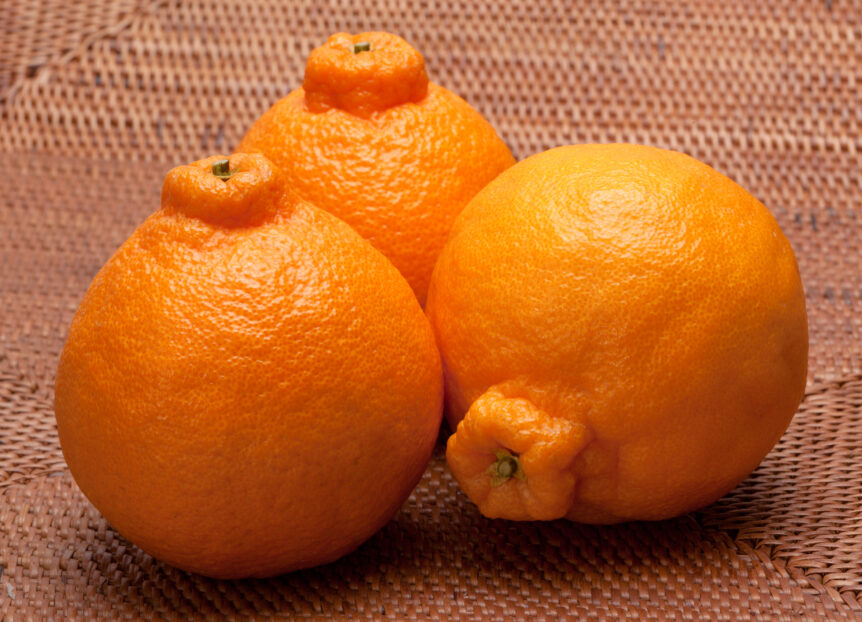
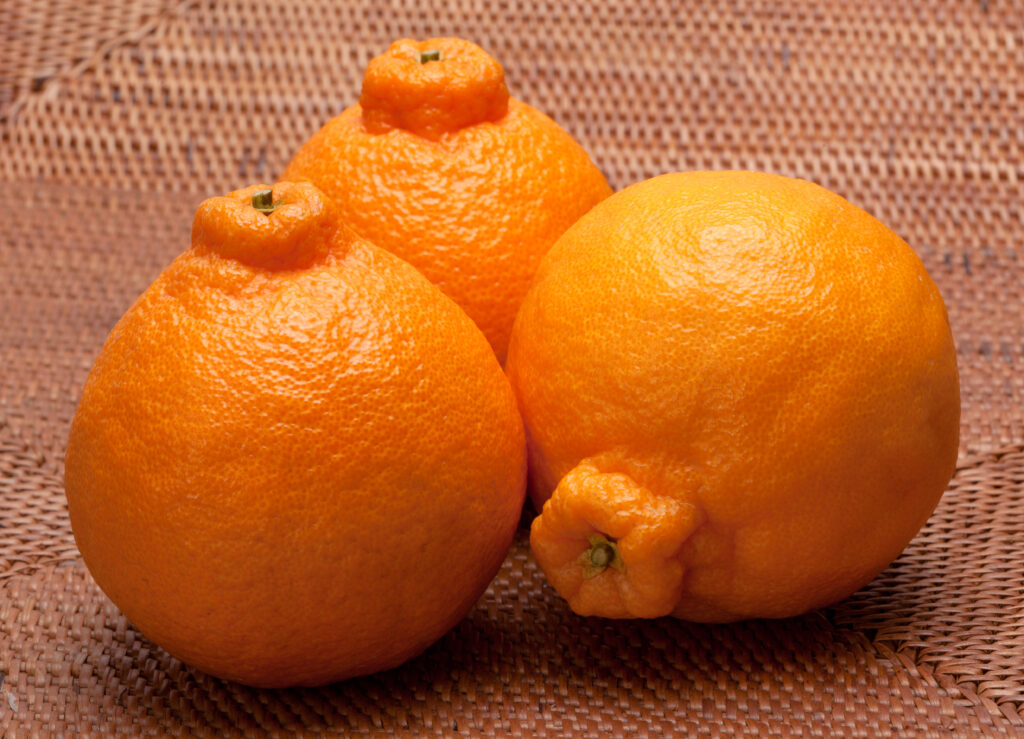
(Photo by Laitr Keiows, CC BY-SA 3.0, via Wikimedia Commons)
Cold-hardy citrus leaders have preached for years about the need for growers to diversify their crop beyond satsuma mandarins.
Producers have listened and responded, trialing different varieties and growing them successfully in the cold-hardy region that encompasses North Florida, South Georgia and South Alabama.
Satsumas were a reason that growers started expanding north of the normal citrus production region in Florida. The fruit remain the predominant variety grown in the cold-hardy citrus region. But after more than a decade of production, satsuma’s popularity has been reduced.
“That’s why we took out 250 satsuma trees and planted about 50 other varieties,” said Lindy Savelle, executive director of the Georgia Citrus Association and co-owner of JoNina Farm in Ochlocknee. She noted that many small growers in the cold-hardy region are looking to find their niche with varieties.
“Not only on the producer side, but on the consumer side as well, people want to try different things,” said Savelle.
Satsumas are now sharing the production stage with other varieties like Shiranuis, Tangos and the University of Georgia’s Southern Frost Navel.
Savelle estimates that satsumas currently occupy a little more than half of the citrus produced in the region. She forecasts that it will be less than half of citrus produced in the not-so-distant future.
“We’ve made some great strides in diversification,” Savelle said. “You don’t want to talk down satsumas to the point where you squash your market. But at the same time, you’ve got to be realistic that satsumas only provide a certain window of opportunity for a grower. You’ve got to diversify to open up the timing of more fruit.
“Yes, satsumas are phenomenal. Yes, it is the most cold-hardy mandarin you can grow. But there are other varieties that if you manage them properly, they’ll be just as viable.”
Learn more from the University of Georgia on variety evaluation here.

By Clint Thompson