









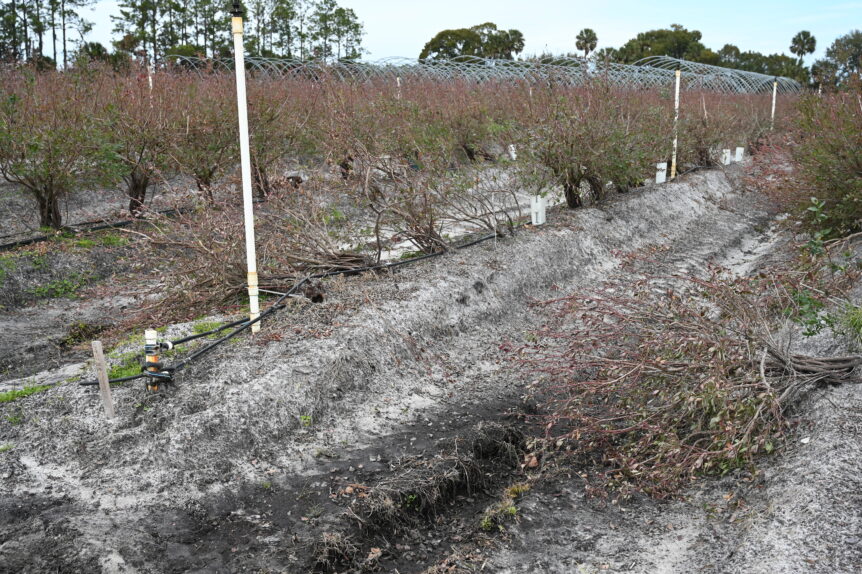
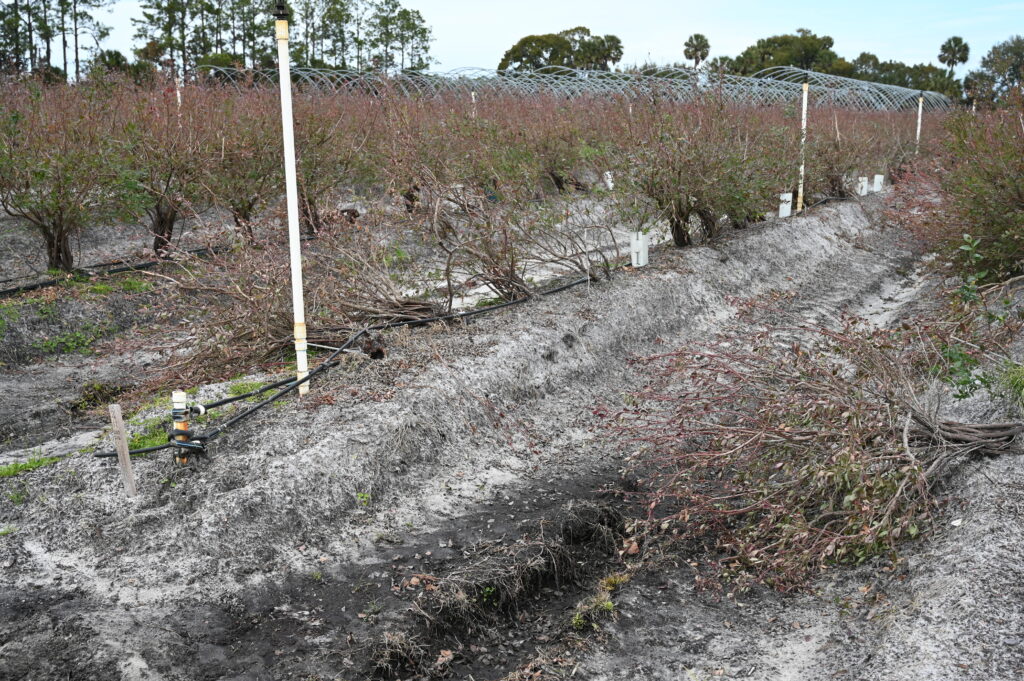
After a week and a half, the full scale of damage that the late January/early February freeze has inflicted on Florida blueberries is beginning to unfold. This was seen in a damage assessment tour (Feb. 10-11) organized by the Florida Blueberry Growers Association and North American Blueberry Council. The tour focused on farms in North and Central Florida.
One of the stops was at H&A Farms in Mount Dora. The farm is in what several growers called “ground zero” for low temperatures and high winds. There was a large turnout of blueberry growers in attendance.
STATEMENT FROM SIMPSON
Florida’s Commissioner of Agriculture Wilton Simpson joined the tour to hear grower concerns and discuss possible disaster relief to come. A common theme was communicated to Simpson and others in attendance: Fast financial relief is needed. Additionally, federal programs like crop insurance and H-2A need flexibility after the disruption of the freeze.
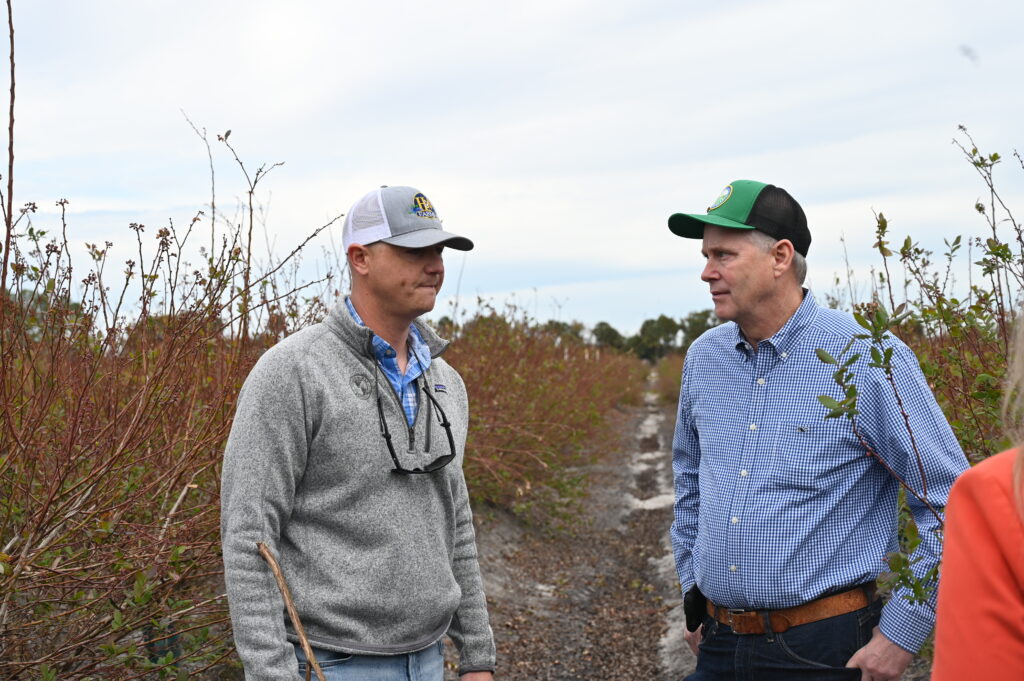
While many of the applicable programs are administered by the federal government, Simpson said he’d advocate and push the agencies for quick action and flexibility. He noted he has a direct line to the White House and U.S. Department of Agriculture, has been in close contact with both and would continue to share the historic nature of the freeze.
Simpson said that relief funds from the federal government block grant of $600 million from the hurricanes two years ago are just now becoming available. Those funds will be distributed through the agency he leads — the Florida Department of Agriculture and Consumer Services (FDACS). Now that the process of delivering the hurricane relief has been created and established, he is hopeful action will come faster after this freeze disaster. He added that growers can’t afford to wait for two years to receive relief.
“What I have asked the federal government to do is to provide some additional block grant dollars with the terms and conditions that we’ve already negotiated (under the $600 million grant),” Simpson said. “If my agency (FDACS) gets those resources, we will be able to immediately distribute them based on the formula that has been pre-agreed to with the federal government based on crop losses and things of that nature.
“I am hopeful they (federal government) understand the devastation, and I believe they do. In the coming month or so, if we can get the final numbers (on damage), we will get that information to the White House and our congressional partners and hopefully get a supplemental attachment in the budget process to get us those resources, and we can start distributing it.”
A TOUGH TIME
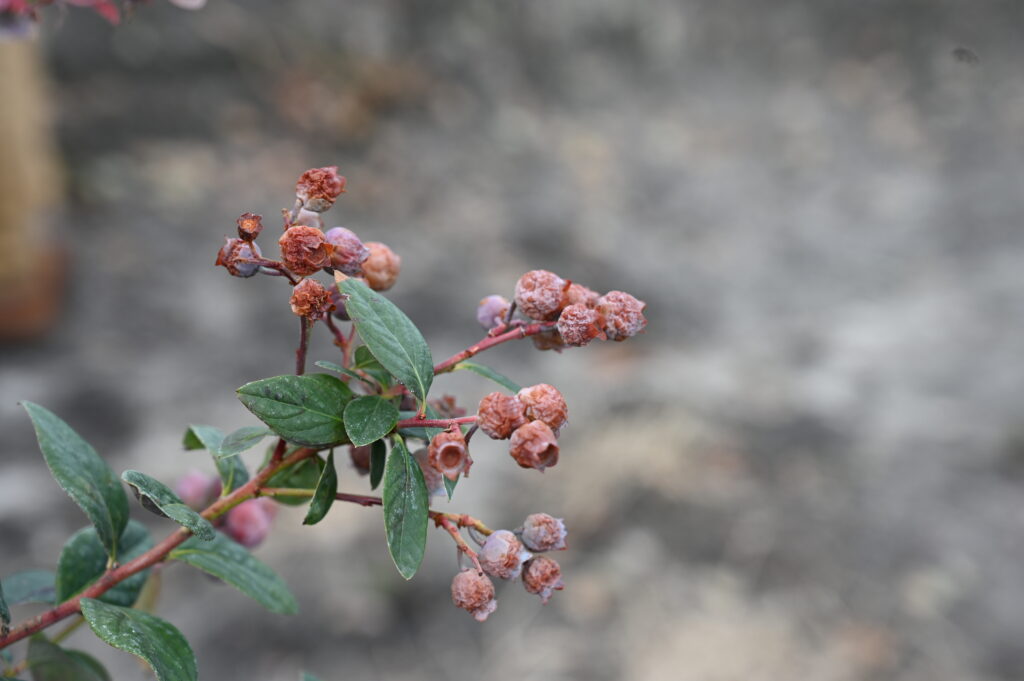
Michael Hill, an owner of H&A Farms, emphasized the need for aid in his comments. Temperatures on the farm where the tour took place fell to the low 20s with winds up to 40 mph. The H&A Farms packinghouse in Mount Dora handles about 35% of the Florida blueberry crop. He said estimates indicate that about 76% of the fruit H&A packs has been lost to the freeze. In addition to fruit loss, many plants have been destroyed due to high winds and the weight of ice used to protect the plants. Damage to irrigation systems has also occurred.
“Last week has been one of the worst of my life,” Hill said. “I have been doing this for 16 years, and I am a fourth-generation farmer, so this is tough. I have seen five grown men cry this week. These are farmers — cowboy souls — so it just illustrates how devastating this freeze has been.”
Despite the tough situation, Hill emphasized Florida farmers are resilient and will weather this storm and bounce back as they have many times before.

By Frank Giles