









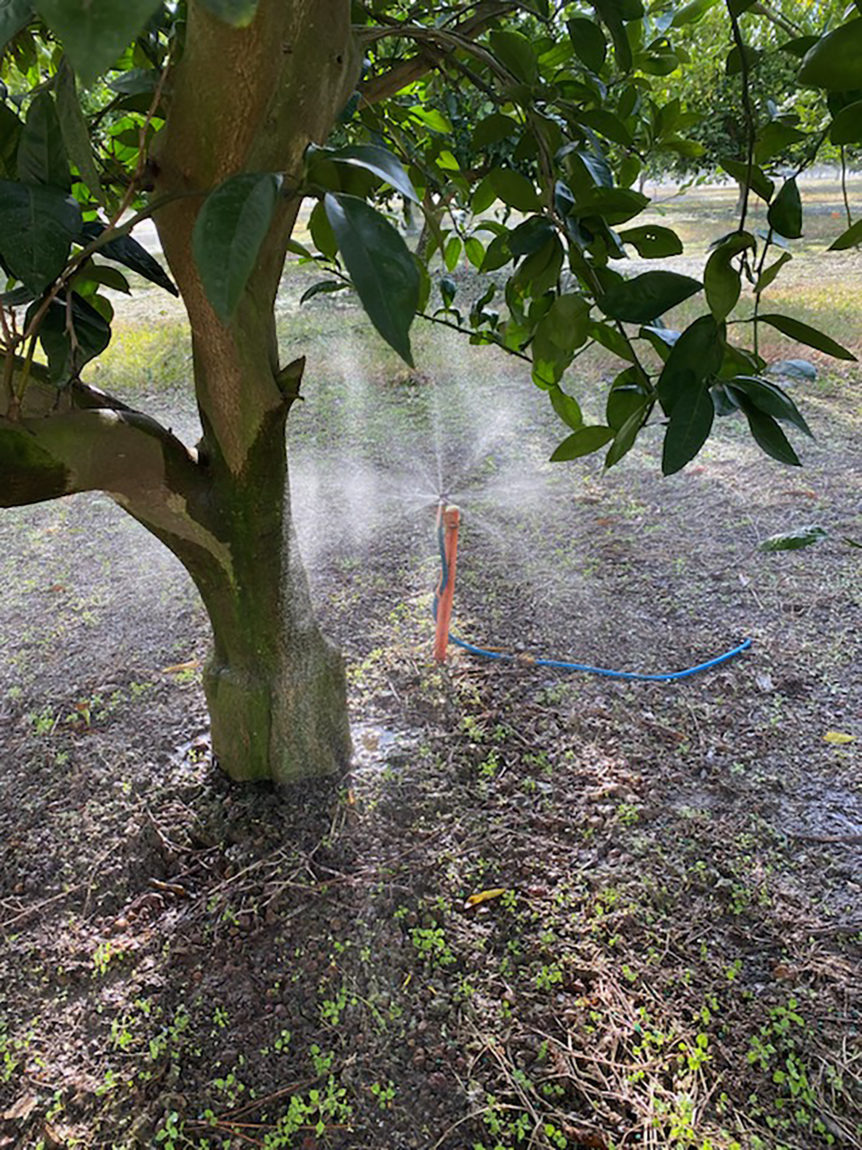

Consistent irrigation is needed during the final few weeks of production for this year’s crop in the cold-hardy citrus region. That management tactic will help prevent fruit splitting, said Mary Sutton, University of Georgia (UGA) assistant professor and citrus Extension specialist.
Sutton said she has seen fruit split in a couple of spots that was caused by extended dry, hot periods followed by excessive rainfall or very heavy irrigation.
Fruit split usually starts at the bottom end of the fruit and spreads vertically up the fruit. The condition is normally seen during the rapid growth phase and maturation phase.
Splitting can invite secondary diseases to move in. Fungi are the primary and most destructive secondary invaders following fruit splitting. Fungi can cause problems like black rot or anthracnose. While less common than fungi, certain bacteria can also colonize split fruit.
Sutton recommends growers remove any split fruit from the tree canopy.
“If it’s already happening or if it has already happened, we can’t unsplit the fruit, but keeping irrigation consistent is key,” she said. “We don’t want to have extended periods of absolutely no water followed by very heavy watering or heavy rain. It’s just all about consistency.”
Sutton added that citrus growers usually observe the splits running vertically along the gap between two segments of the fruit or in areas where the peel is particularly thin. The problem is more common in thinned-skinned fruit, such as satsumas and navel oranges.
Get advice on preventing fruit split here.
Source: Georgia Citrus Association
By Clint Thompson