









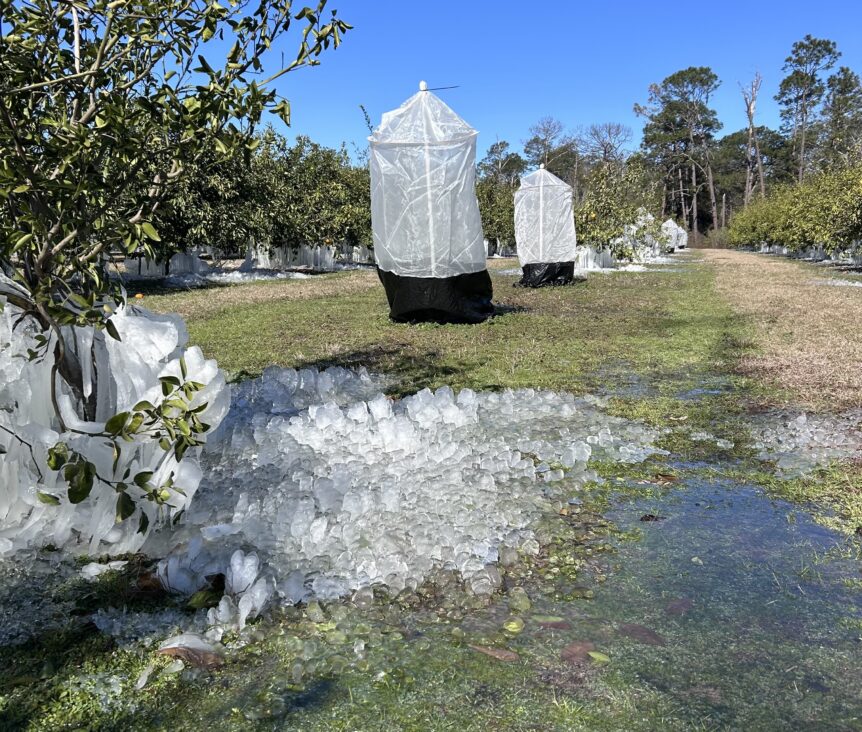
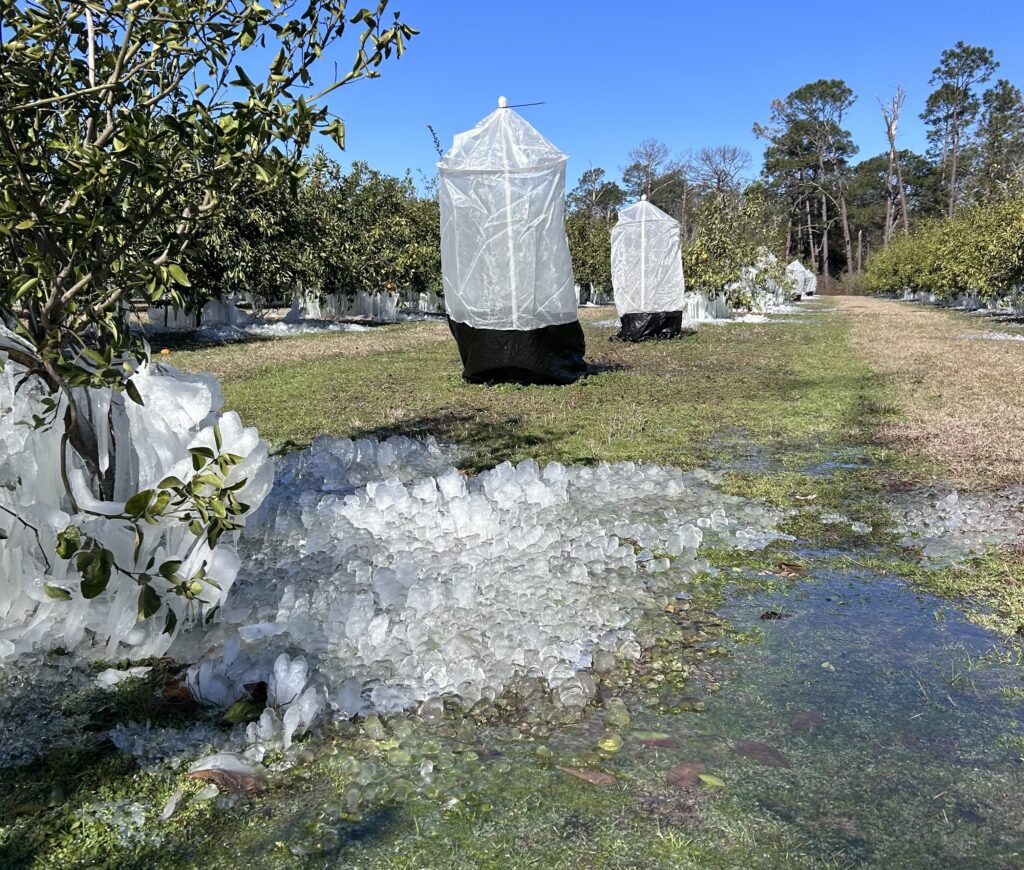
Cold-hardy citrus producers are now coping with the aftermath of last weekend’s winter storm. Water was a key tool that growers used in efforts to protect their crop from sub-freezing temperatures and blistering wind chills. Now, they need that water to drain as quickly as possible, says Lindy Savelle, executive director of the Georgia Citrus Association.
“You don’t want to use any more water than you need to — for conservation purposes as well as preventing root rot. You’ve got to get that field drained of water,” Savelle said. “Growers need to be looking at how best to get this water out of the field. We’re very fortunate that our grove is planted on a higher rise than the rest of our farm, so it drains off.”
Savelle said water that lingers in the grove can lead to phytophthora and root suffocation, which can kill trees.
“Citrus doesn’t like wet feet. It doesn’t like to be mucky,” Savelle said. “The sooner that we can get the water off the tree roots, the better it will be for the tree.
“Hopefully, growers didn’t plant their groves where they’re going to retain water. That’s one of the first things I tell people. You need land that drains well, because if it doesn’t drain well, you don’t need to be putting citrus there.”
Savelle, with JoNina Farm in Thomas and Mitchell counties, started watering Saturday morning and did not stop the irrigation until Monday morning.
“We did put down a whole lot of water — 14 gallons per hour per tree. We ran it for 48 hours … that’s a lot of water on the trees,” Savelle said.
Growers should also be mindful that while scouting for any postfreeze damage, many of the symptoms may not appear until later.
“You’re going to have dieback on tree limbs. You just need to give that time to surface. It could be well into the summer before you see all of the damage. It takes months for that to show up,” Savelle warned.

By Clint Thomposon