









By Frank Giles
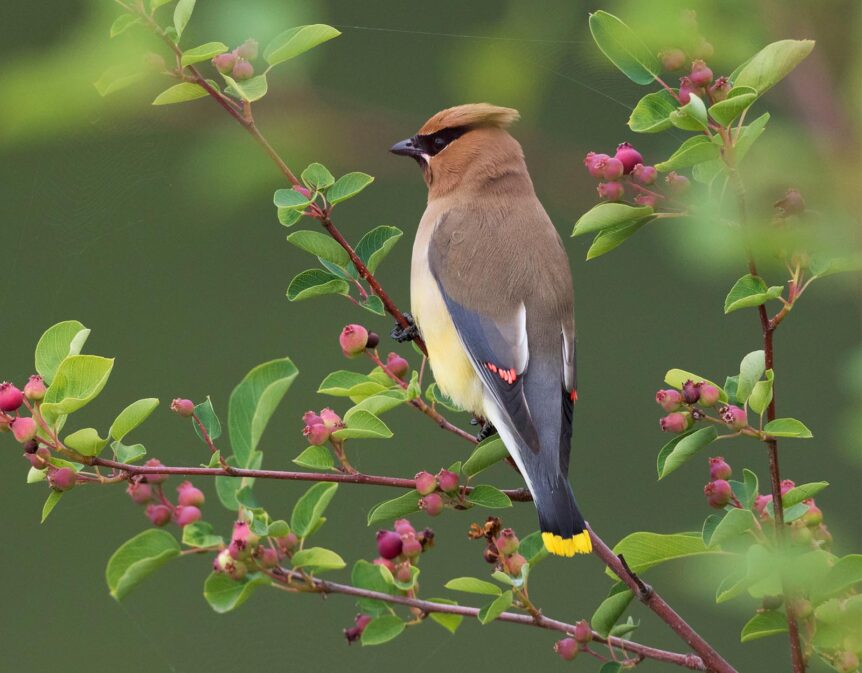
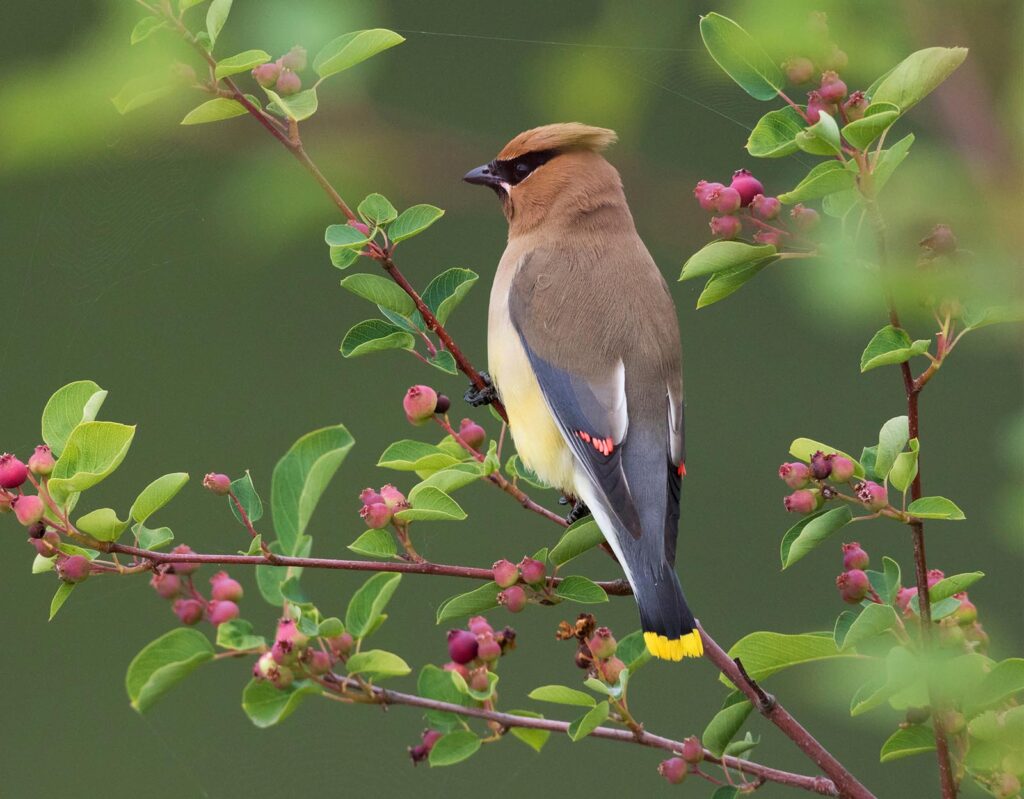
In research literature, cedar waxwings are described as frugivores — animals that thrive mostly on fruits. Blueberry growers know that term is spot on as the birds find blueberries a favorite source of food.
For growers in Florida and Georgia, the birds can do significant damage to yields by direct feeding on the fruit or knocking berries in clusters to the ground while feeding. It is a constant battle to try to harass the birds and keep them out of blueberry fields, especially after the birds become settled in a location.
A paper published by the U.S. Department of Agriculture (USDA) Animal and Plant Health Inspection Service titled “Cedar Waxwings” recommends taking action early when birds are observed. Allowing the birds to become settled makes deterrence more difficult.
The USDA paper notes: “Cedar waxwing flocks react to harassment by people on ATVs using pyrotechnics or other loud noisemakers by lifting off, flying out of range, and settling down again. If driven out of the field, they likely will perch in nearby trees and then swoop into the field once more when the threat of harassment decreases. Removal of birds from a blueberry or strawberry field requires persistent harassment throughout the day.”
Bad Season for Birds
Doug Phillips, blueberry Extension coordinator for the University of Florida Institute of Food and Agricultural Sciences, says cedar waxwings were pretty bad in blueberry fields last season, after giving growers a break the previous two seasons. He said it is hard to predict when the birds will be problematic.
“The severity of the birds seems to be related to migratory patterns (which could have something to do with the winter temperatures in Florida) as well as the availability of other food sources,” Phillips says. “It was a colder winter last season, so it’s possible the waxwings migrated farther south away from the blueberry areas. Also, a lot of the natural (non-cultivated) food sources were negatively impacted by the freeze (e.g., Brazilian peppers, which bloom at the same time as blueberries in the woods).
“In addition, since some growers had so much freeze damage that they didn’t harvest anything and hedged their plants back shortly after the freeze, there were fewer blueberries available to waxwings than in a typical season. So birds were concentrated on those farms that did have a crop. Timing of crop ripening could also have an impact, regarding how well that syncs up with the migratory patterns.”
Possible Solutions
According to Phillips, the lack of any one solution to run the cedar waxwings out of fields is the challenge faced by growers. Netting is the solution that seems most effective but is not widely practiced.
“As far as netting goes, I don’t see that being applied much other than on a small farm,” Phillips said. “I think it would be too expensive, and would obstruct the harvesters, requiring taking it down and putting it back up frequently.
“Most growers are using Bird Gard, fireworks, compressed air cannons, drones and sometimes mylar ribbon or other reflective items tied to the top of sprinkler risers. Most growers use several or all of these together, hoping that the cumulative effect will help minimize the presence of waxwings, or at least keep them on the move. Nothing at this point is highly effective.”
The use of drones is a newer technological approach to waxwing deterrence. Skysense has brought the technology to blueberries. The company provides a professional drone service to monitor fields and deploy unique sounds designed to startle and disperse birds both before and after they land. According to the company, the ability to deliver a menu of different sounds, while harassing birds with drones, helps overcome the habituation the birds develop toward scare tactics.