By Clint Thompson Most of Alabama’s peach farmers felt the sting of an early spring freeze event. It wiped out much of the state’s early varieties, including some on Mike Reeves’ farm in Hartselle, Alabama. “We got hurt by the freeze on our early varieties and our late varieties but most of our mid-season varieties are in pretty good shape,” …
Peach Producer Beware: Weather Conditions Conducive for Anthracnose Development
By Clint Thompson Bacterial spot is currently affecting peach orchards across the Southeast region. But it may not be the only disease to impact the trees during the final few weeks of this season. According to Phil Brannen, University of Georgia Cooperative Extension fruit disease specialist, anthracnose disease could become problematic on untreated trees, if the rainy conditions continue across …
Georgia Peach Harvests at ‘Normal Pace’
By Clint Thompson Georgia peach harvests are moving at a normal pace following a sluggish start to the season. “I feel like we’re rolling about like normal now,” said Jeff Cook, University of Georgia Cooperative Extension agriculture and natural resources (ANR) agent for Peach and Taylor counties. “We just went past one of the packing sheds, my son’s with me; …
San Jose Scale’s Minimal Impact in Peaches
By Clint Thompson San Jose Scale’s impact in Georgia peaches this year has been noticeably not as bad compared to recent years. “No, it’s not bad this year,. I need to knock on wood, but we haven’t been seeing a huge pressure,” said Brett Blaauw, assistant professor at the University of Georgia (UGA) College of Agricultural and Environmental Sciences. “This …
Bacterial Spot Becoming Problem on Untreated Peaches
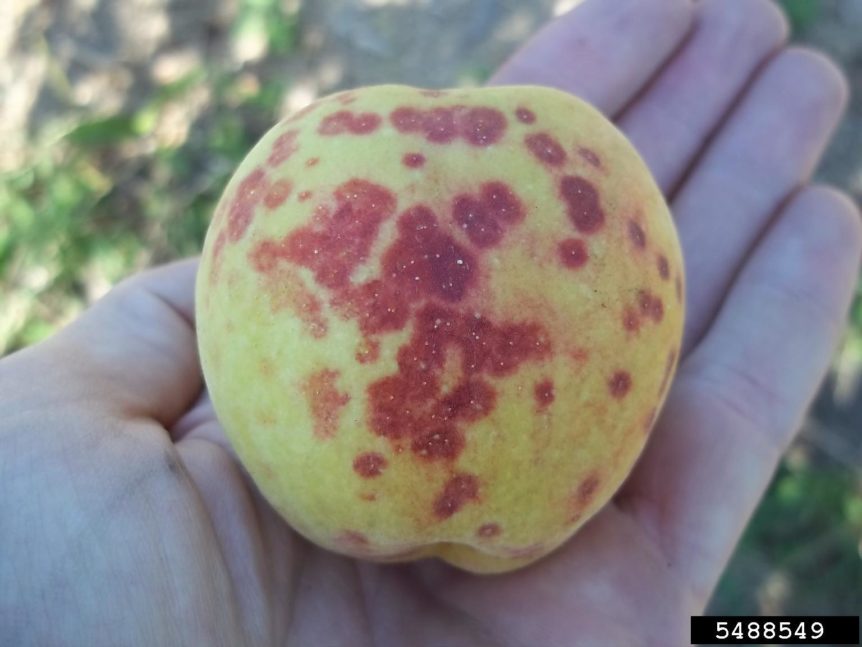
By Clint Thompson Peach management this year changed quickly in the last few weeks. The drought to start the year reduced disease buildup in orchards in Georgia and Alabama. However, with the recent increase in rainfall, bacterial spot disease is starting to spike in untreated peaches. Phil Brannen, University of Georgia Cooperative Extension fruit disease specialist, noted the development in …
Early-Season Peaches Lacking in Central Alabama
By Clint Thompson Like in most areas in the Southeast, Central Alabama’s peach crop was impacted by freezing temperatures in mid-March. It wiped out early peach varieties, according to David Lawrence, regional Extension agent in central Alabama. That has changed since, however. “We didn’t have a great early season or early crop. A lot of our mid-season varieties are coming. …
UGA Fruit Specialist Hopeful Peach Crop Dodges Diseases Amid Increased Rains
By Clint Thompson Peach diseases have been mostly non-existent in the Southeast this year. The prolonged drought that impacted the region from last September to May is a big reason why. Phil Brannen, University of Georgia Cooperative Extension fruit disease specialist, hopes the lack of disease impact this year will continue through the end of harvests, typically around late July. …
Specialty Crop Grower Magazine: What’s New in Peach Varieties and Rootstocks?
By Frank Giles Peach breeders at Clemson University and University of Georgia (UGA) work to develop varieties that are suited for the Southeast climate and for resistance to various pests. Dario Chavez, UGA associate professor, describes a rootstock developed in conjunction with the U.S. Department of Agriculture. Ksenija Gasic, Clemson professor, describes three newer peach variety releases. P-22 Rootstock P-22 …
Specialty Crop Grower Magazine: Georgia Grower Sees Strong Peach Production
By Clint Thompson Harvest season is just around the corner for Southeast peach producers. For Lane Southern Orchards in Central Georgia, this means working round the clock this time of year. “The H-2A contracts start in February, so that’s when peach season starts,” says Tyler Wainwright, farm manager for Lane Southern Orchards. Wainwright oversees production practices in peach orchards west …
Maintaining, Not Growing: Industry Expert Discusses Future of Georgia Peaches
By Clint Thompson Georgia will always be known as the “Peach State.” But at this point, it may just be about maintaining production instead of growing as an industry. There are multiple reasons for that, believes Jeff Cook, University of Georgia Cooperative Extension agriculture and natural resources agent for Peach and Taylor counties. “I don’t know that in the middle …