By Maegan Beatty Bulimulus bonariensis, also called the peanut snail, is a non-native tree snail from the West Indies. As a detritivore, B. bonariensis was not considered an agricultural pest until around 2015 when peanut growers in the Florida Panhandle started seeing the snail in large numbers. The pest does not only affect peanuts; it can harm other southeastern crops …
Election Year Challenge: Farm Bill Finalization Needed Sooner Rather Than Later
By Clint Thompson Election Day is five months away. Campaigning will begin far sooner. It places an emphasis on finalizing a farm bill at an expedited timeframe. Kam Quarles, CEO of the National Potato Council and co-chair of the Specialty Crop Farm Bill Alliance (SCFBA), talked about the importance of Congress finalizing the legislation sooner rather than later. “It’s a …
Florida Tomato Conference Slated for Sept. 5
Florida tomato growers should mark their calendars for Thursday, Sept. 5. The annual Florida Tomato Conference will be held from 9 a.m. to 5 p.m. at the Clewiston John Boy Auditorium in Clewiston, Florida. The event attracted nearly 300 attendees last year which led to it being moved to a larger location. The venue will provide a better learning experience …
Rainy Forecast: Persistent Showers Expected to Continue
Persistent rainfall that has drenched parts of the Southeast is not expected to change anytime soon, according to one weather expert. Rains should stay consistent in the region for the foreseeable future, says Pam Knox, University of Georgia (UGA) Extension agricultural climatologist. “When you look at the medium-range and long-range models, I don’t see a big shift to drier conditions; …
Specialty Crop Industry Applauds Movement on Farm Bill
WASHINGTON, D.C. (June 11, 2024) – The Specialty Crop Farm Bill Alliance (SCFBA) has issued the following statement following the release of a farm bill framework by Senate Agriculture Committee Ranking Member (John) Boozman. “The Specialty Crop Farm Bill Alliance commends Sen. Boozman for his contribution to moving the 2024 farm bill process forward today. The specialty crop industry plays …
USDA Announces May 2024 Lending Rates for Agricultural Producers
WASHINGTON – The U.S. Department of Agriculture (USDA) has announced loan interest rates for May 2024, which became effective May 1, 2024. USDA Farm Service Agency (FSA) loans provide important access to capital to help agricultural producers start or expand their farming operation, purchase equipment and storage structures or meet cash flow needs. “I encourage our lenders and borrowers alike to …
GFVGA Joins Lawsuit Against DOL
The Georgia Fruit and Vegetable Growers Association (GFVGA) has joined a coalition of producers and state attorneys general to file a lawsuit against the Department of Labor (DOL), challenging new rules proposed for the H-2A program. These new “Worker Protection Rules” are slated to go into effect in late June and will continue to make the H-2A process prohibitively expensive …
Mini Melon Harvests Underway in Georgia
By Clint Thompson Watermelon harvests are underway in Georgia. It’s not the big, seedless melons, which are still a few days away. Mini melons were being harvested last week. Jaime Patrick, Patrick Family Farms in Omega, Georgia, said his mini melons were being harvested, starting on Thursday, June 6. “We’ll do 15 buses a day, something like that. It isn’t …
Specialty Crop Grower Magazine: Managing San Jose Scale in Peaches
By Frank Giles San Jose scale is one of the more problematic pests peach growers in the Southeast must manage. Since the early 2000s, San Jose scale has emerged as a one of the region’s most common and damaging pests. Spread The scale is a prolific breeder. According to the University of Georgia (UGA), the female can produce about 10 …
Chilli Thrips Control: UF/IFAS Study Shows How Strawberry Growers Can Use Less Pesticides
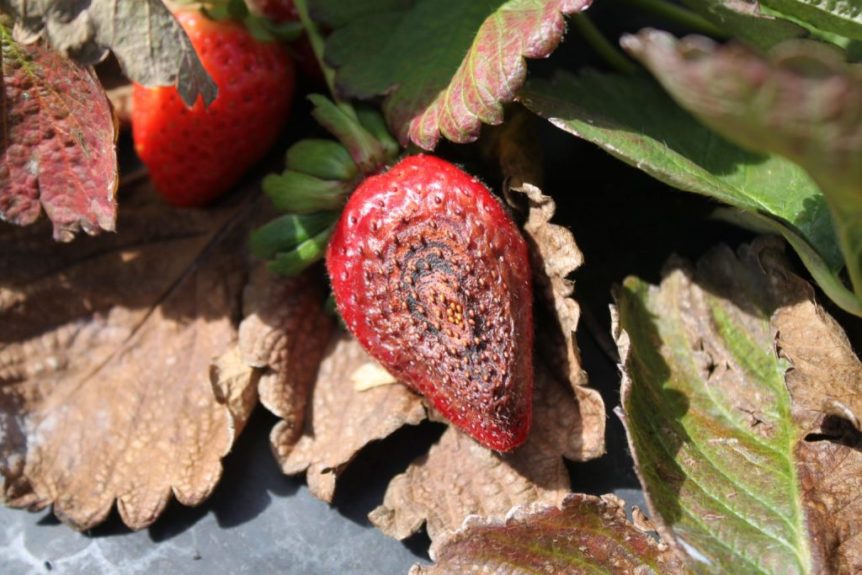
Florida strawberry growers can use less pesticide and save money as they attempt to control chilli thrips, University of Florida Institute of Food and Agricultural Sciences (UF/IFAS) research shows. An invasive pest in the southeastern United States, chilli thrips was introduced to the United States from Southeast Asia. The first report in Florida came in 1991 in Okeechobee County and …