









Clemson Extension agents provide crop updates in The South Carolina Grower this week about the status of various crops being produced throughout the state. Coastal Region Zack Snipes reports, “It is hot and very, very dry in the Lowcountry. We desperately need some rain on the coast. Many irrigation ponds are at very low levels and may only have a …
UF/IFAS Begins Research to Update Best Management Practices Nutrient Recommendations
The University of Florida Institute of Food and Agricultural Sciences (UF/IFAS) received $8.8 million to conduct new research that will provide farmers with new and improved recommendations for fertilization of key Florida crops. The funding, approved by the Florida Legislature, will be administered by the Florida Department of Agriculture and Consumer Services (FDACS). Farmers apply fertilizers to their crops within …
Florida Tomato Season Recap
By Frank Giles The Florida tomato season is in the books. We asked Michael Schadler, executive vice president of the Florida Tomato Exchange, how the season went and what are the Exchange’s priorities heading into next year. Here’s what he had to say. How did the season go for your grower members? Schadler: From a production perspective, we had a …
Sneak Peek: July 2022 Specialty Crop Industry Magazine
The July issue of Specialty Crop Industry Magazine highlights the changing landscape in agriculture and the need for policy reform, specifically pertaining to increased imports. Zhengfei Guan, an associate professor, and Kuan-Ming Huang, a postdoctoral research associate, both at the University of Florida Institute of Food and Agricultural Sciences (UF/IFAS) Gulf Coast Research and Education Center in Wimauma, Florida, discusses …
Keeping Pecans Watered During Dry Weather
Temperatures may be high and dry conditions may be widespread across the Southeast, but pecan growers should not panic and apply too much water, according to the University of Georgia Extension pecan blog. Because pecan trees can adapt in extreme weather conditions, growers can continue on the normal recommended irrigation schedule and nuts will continue to size properly, says Lenny …
UF/IFAS Scientists Finding Grapes to Grow in Florida
Florida farmers and other businesspeople are bubbling with enthusiasm to make wine. There are about 40 wineries around Florida. As of 2017, growers in the Sunshine State were producing more than 1,500 acres of muscadine grapes. That’s a 74% increase in 10 years, and producers will be harvesting in July and August. To meet the increasing market for Florida-grown grapes, Ali Sarkhosh, …
Brix Addressed in Proposed U.S. Legislation
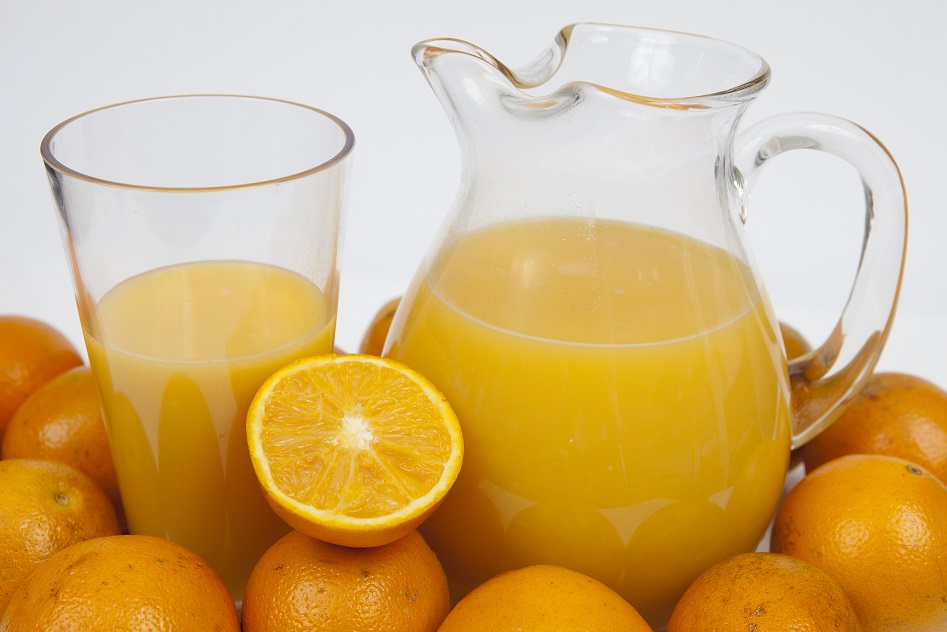
U.S. Senators Marco Rubio and Rick Scott of Florida introduced the Defending Domestic Orange Juice Production Act. The legislation would direct the U.S. Food and Drug Administration (FDA) to lower the required Brix level of not-from-concentrate pasteurized orange juice from 10.5% to 10%. U.S. Representatives Mario Díaz-Balart, Debbie Wasserman Schultz, Stephanie Murphy, Kat Cammack, Daniel Webster, Maria Elvira Salazar, Darren Soto, Al …
Mating Disruptions for Grape Root Borer
By Clint Thompson Now is the time in the production season that grape root borer adults begin emerging. Growers need to implement mating disruption now as a management tactic, says Brett Blaauw, assistant professor at the University of Georgia (UGA) College of Agricultural and Environmental Sciences in the UGA Extension Viticulture Blog. Grape root borers tunnel into larger roots and …
UF/IFAS Scientists Finding Grapes to Grow in Florida
Florida farmers and other businesspeople are bubbling with enthusiasm to make wine. There are about 40 wineries around Florida. As of 2017, growers in the Sunshine State were producing more than 1,500 acres of muscadine grapes. That’s a 74% increase in 10 years, and producers will be harvesting in July and August. To meet the increasing market for Florida-grown grapes, …
Heat, Dry Conditions Worsening Across Southeast
The heat and dry conditions intensified last week across the Southeast, especially in Georgia where most of the state is either abnormally dry, moderately dry or severely dry. According to the U.S. Drought Monitor, all of North Georgia is at least abnormally dry. A pair of regions in the northeastern part of the state are moderately dry. The worst conditions …