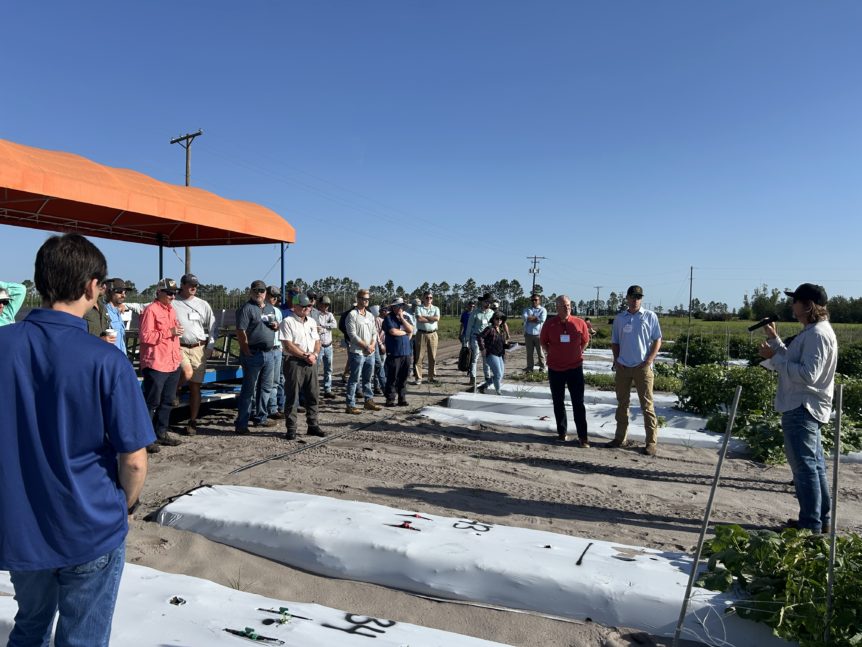
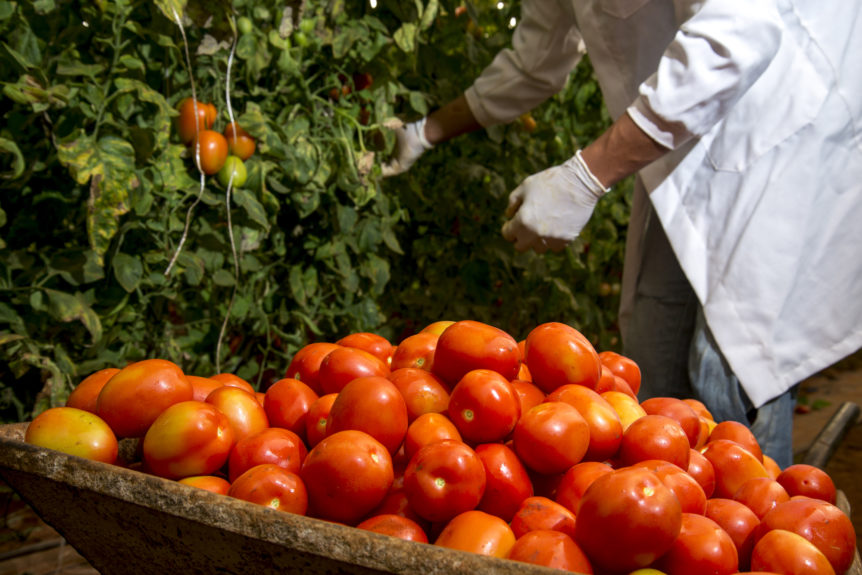
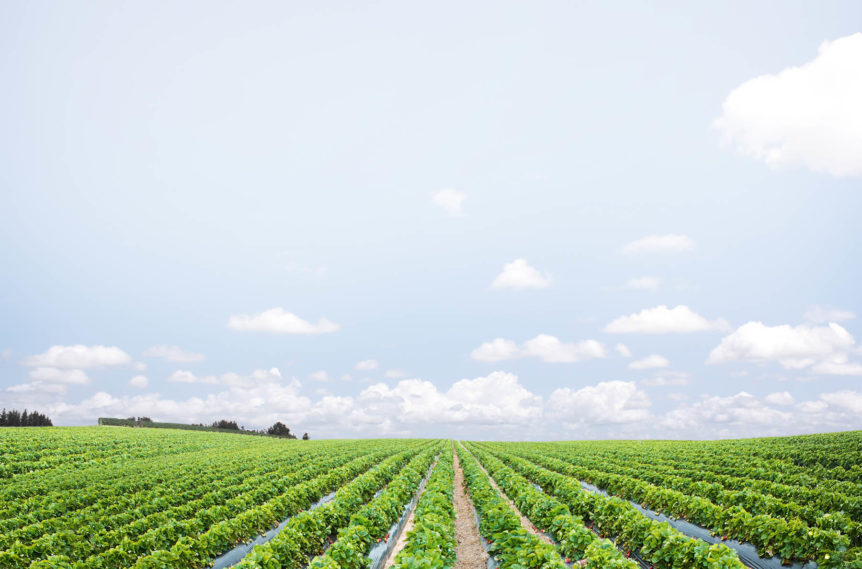
By Frank Giles Southeastern tomato growers largely rely on plasticulture to produce commercial-scale crops. Production practices are well established, but some growers are considering new bed designs based upon recent research. Sanjay Shukla, University of Florida Institute of Food and Agricultural Sciences (UF/IFAS) professor of water quality, initiated research several years ago to examine potential benefits of a new bed …
Combine Mancozeb and Copper in North Florida Watermelons
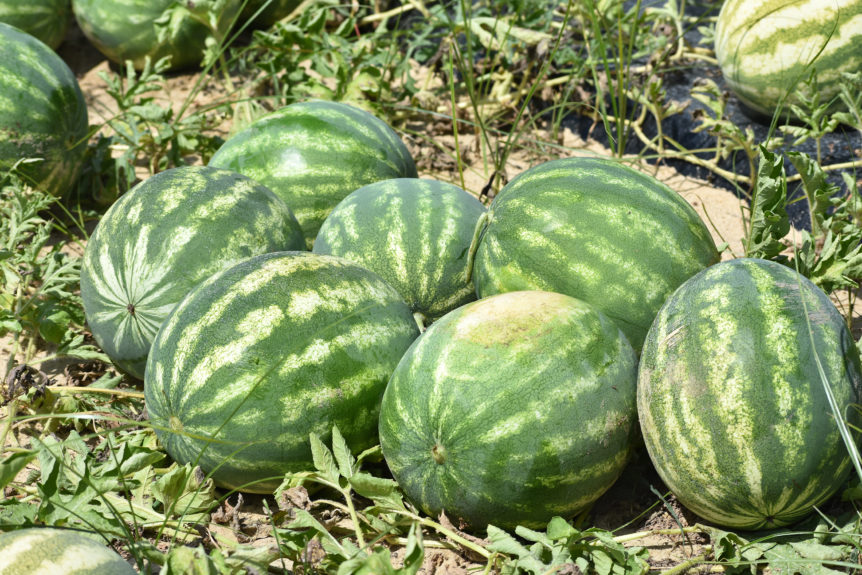
By Clint Thompson North Florida watermelon growers must avoid applying copper with chlorothalonil when protecting against disease buildup. Bob Hochmuth, University of Florida Institute of Food and Agricultural Sciences (UF/IFAS) Regional Specialized Extension agent in Live Oak, Florida, emphasized this stance early in the season and continues to stress its importance as it could lead to plant burning. “If they’re …
Commissioner Simpson Announces Completion of Major Updates to BMP Manuals
TALLAHASSEE, Fla. — Florida Commissioner of Agriculture Wilton Simpson recently announced the completion of major updates to nine existing agricultural Best Management Practices (BMP) manuals, which provide specific, research-based practices to producers to improve water quality, along with the introduction of a new BMP manual for small farms and specialty livestock. These updates mark the first comprehensive revisions in nearly …
Fusarium Wilt Observed in North Florida Melons
By Clint Thompson Fusarium wilt was observed last week in North Florida watermelon fields. Weather conditions were ripe for development, says Bob Hochmuth, University of Florida Institute of Food and Agricultural Sciences (UF/IFAS) Regional Specialized Extension agent in Live Oak, Florida. “Most of the fields are not far enough long to start showing it yet. However, in some of those …
Scout to Stay Ahead of Pest Populations
It is much better for Florida citrus growers to be proactive than reactive when managing pest populations. Scouting and monitoring citrus groves is crucial for growers who hope to thwart off impacts from insects like the Asian citrus psyllid (ACP). If growers are not successful, they will be behind the eight ball in minimizing the impact of these annual pests. …
Specialty Crop Grower Magazine: What to Do About Whiteflies
By Frank Giles and Clint Thompson Whiteflies have grown into one of the top concerns for specialty crop growers in the Southeast. The memories of the 2017 outbreak are still fresh in the minds of many who lost entire crops to the swarming clouds of the pest. According to “The 2017 Georgia Plant Disease Loss Estimates” report compiled by Elizabeth …
Watermelon Replant? North Florida Producers Must Consider Options Following Wind Damage
By Clint Thompson A common theme so far this spring for North Florida watermelon producers has been damage to plants from wind and sandblasting. It might force some growers to consider their replanting options, says Bob Hochmuth, UF/IFAS Regional Specialized Extension agent in Live Oak, Florida. “If you keep on getting sandblasted, the first thing that happens is those outer …
Blueberries: A Healthy, Tasty Snack from Florida Farmers
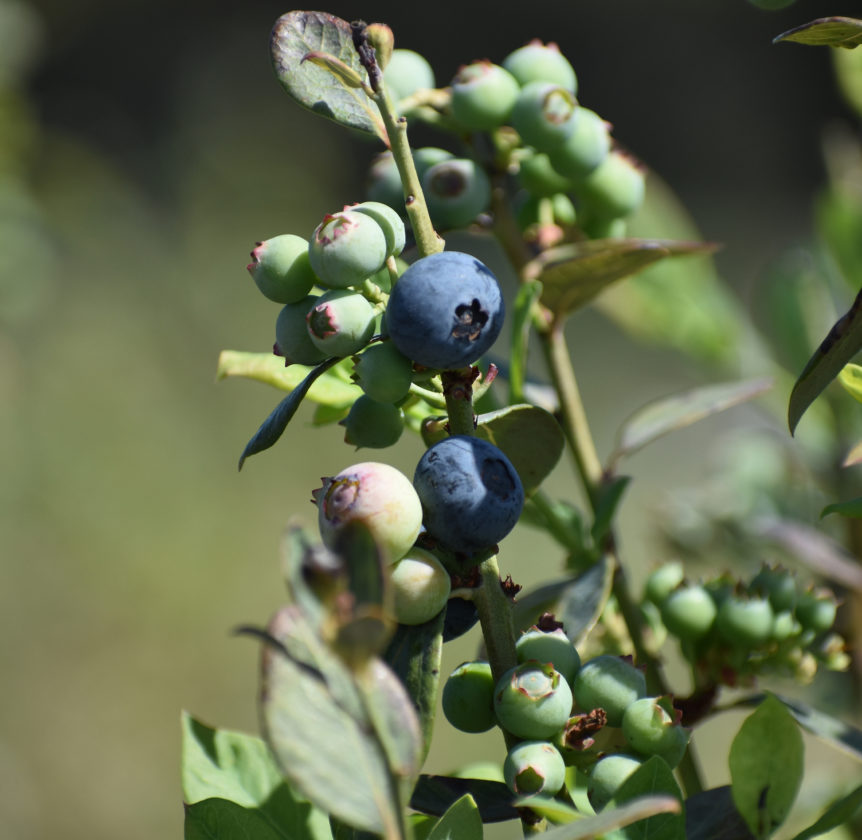
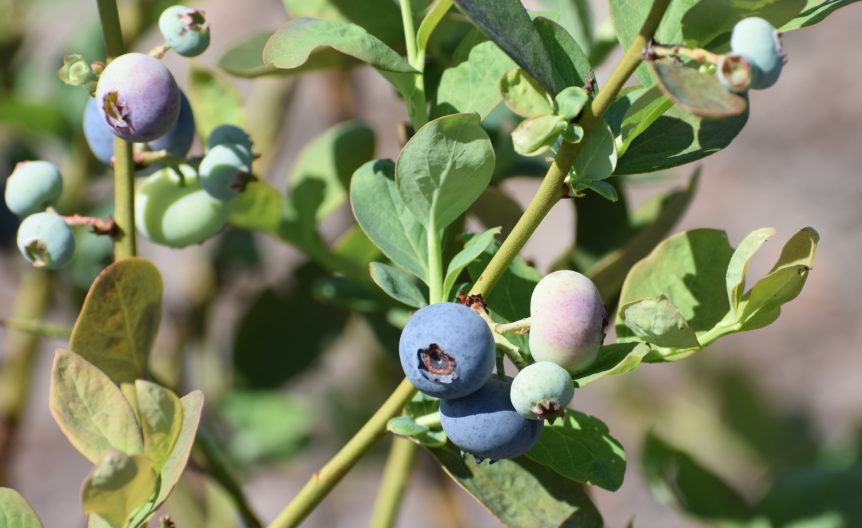
As we head into the heart of Florida blueberry harvest season, which generally lasts from March through May, growers are shipping the fruit to market to meet statewide and national consumer demand. You can find Florida-grown berries in stores, farmer’s markets and U-picks from the Panhandle through South Florida. Along with vitamin C, manganese and fiber, the fruit is known …
Rye’s Benefits as Windbreak for North Florida’s Watermelons
The University of Florida Institute of Food and Agricultural Sciences (UF/IFAS) continues to spout the benefits of rye as a windbreak in watermelon fields in the Suwanee Valley. Their value has been undisputable this year, says Bob Hochmuth, UF/IFAS Regional Specialized Extension agent in Live Oak, Florida. He noted in a recent email to Florida growers that rye can protect …
Specialty Crop Grower: Can Biodegradable Mulches Save Labor, Improve Yields?
By Frank Giles Plastic mulch provides growers numerous benefits in establishing beds to grow crops. Some of those benefits include improved pest and weed management, water conservation and better yield and crop quality. But what do you do with the mulch after growing the crop? It creates an expense for growers to deploy labor to remove the plastic from the …