









Georgia blueberries are progressing this season but don’t expect them to be ready for an early harvest, says Renee Holland, University of Georgia area Extension blueberry agent in Alma, Georgia. “It depends on the weather between now and then. It’s quite warm right now, so things are progressing very quickly, Holland said. “I don’t think we’re going to be two …
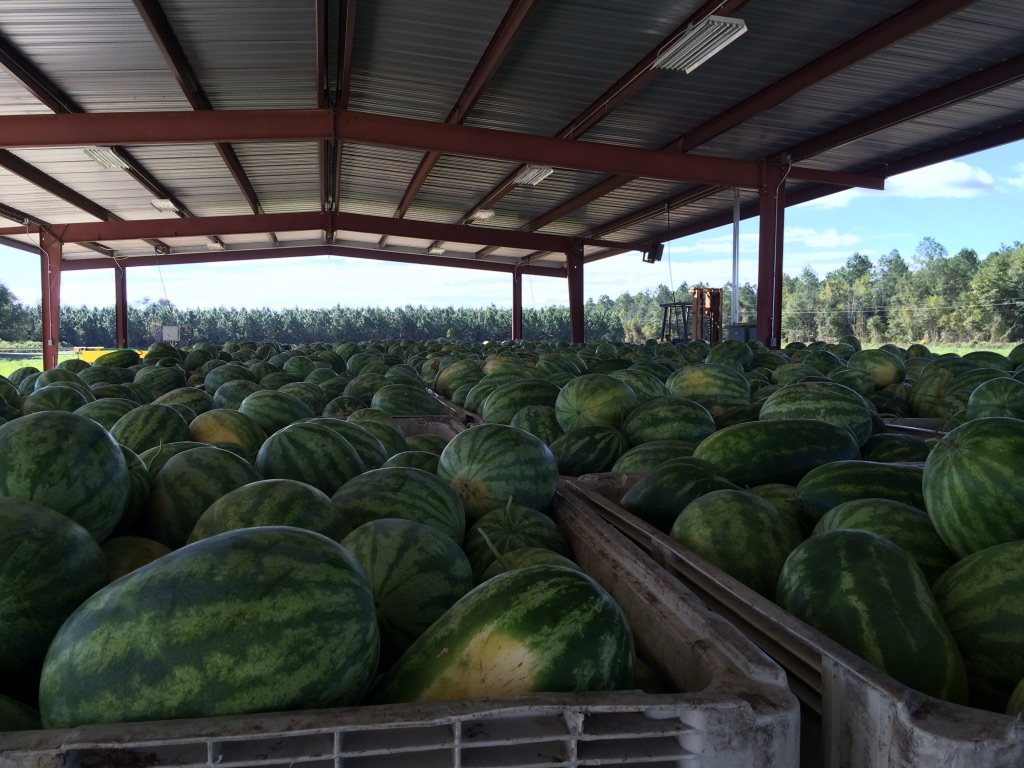
What to Expect? How Watermelons Fare This Year is Anyone’s Guess
South Florida’s watermelon crop is a couple of weeks away from harvest. Producers in that region are looking to rebound after COVID-19 decimated last year’s season. How will producers fare in 2021? Bob Stewart, owner of GID Farms in Immokalee, Florida, says, “You never know.” “You go plant them, grow them and make the best crop you can and let …
Taking its Toll: Strawberry Imports Creating Strain on Farmers
The International Trade Committee’s (ITC) decision regarding blueberry imports was shocking to Florida’s blueberry producers. It was no less surprising to the state’s strawberry farmers who have their own ITC investigation under way. “Our jaws dropped. We know how bad the blueberry deal is and they said they were 5-0 voting against it,” said Matt Parke, farm manager of Parkesdale …
Another Tool in the Toolbox for Citrus Producers?
LAKE ALFRED, FLA — University of Florida researchers continue to study ways to combat Huanglongbing (HLB), or citrus greening disease. One discovery brings the potential of another tool for citrus growers to control Asian citrus psyllid, the insect that transmits the disease-causing bacterium, and protect infected trees from further damage. Kirsten Pelz-Stelinski, an associate professor of entomology and nematology at …
Record-Setting Populations: Asian Bean Thrips Spiking in Some Florida Fields
It was a record-setting week on some South Florida farms with respect to Asian bean thrips (ABT) populations. According to UF/IFAS, across most farms in southeastern Hendry County, ABT populations averaged 0.2 ABT per bud and ranged from 0.3 to 1.5 per bloom (at full bloom). But in an isolated located, reports were as high as 10.0 ABT per bloom …
Devastating Disease: Bacterial Spot a Problem for Some Florida Producers
According to the South Florida Pest and Disease Hotline, bacterial spot disease is active in tomato and pepper fields on the east coast and around southwest Florida. It is present at moderate levels in older hot pepper plants. Bacterial spot disease flares up after rain events and with fog in tomatoes and non-resistant peppers across the southwest region of Florida. …
Sweet Rebound? South Florida Melon Producers Hope to Bounce Back
South Florida watermelon production could use a productive season following last year’s impact from COVID-19. Unfortunately, wind damage may derail farmers’ hopes. “Everything’s beat up from the wind and the cold. The crops that were planted super early more so than the ones that were planted late. I think if the weather stays like it is, the quality will be …
QLA Deadline: Pecan Producers Reminded of April 9 Date
Pecan producers still recovering from Hurricane Michael have three weeks to apply for the Quality Loss Adjustment (QLA) Program. The U.S. Department of Agriculture’s decision to extend the deadline from March 5 to April 9 allows farmers extra time to apply for a program that is assisting producers who suffered crop quality losses due to qualifying natural disasters in the …
Florida Producer: It’s the Greening of Strawberries
Citrus Greening has devastated Florida’s citrus industry. The state’s strawberry producers are concerned about their future with Neopestalotiopsis Fruit Rot disease. It may still be in its infancy, but Neopestalotiopsis Fruit Rot is taking its toll on the Florida strawberry industry. One Florida producer is concerned about its impact moving forward. “I would call it the ‘Greening of strawberries,’” said …
Tale of Two Blueberry Seasons
Florida Grower: It’s not going to be like it was last year It’s a tale of two seasons for Florida blueberry growers. Producers were early with last year’s crop but encountered COVID-19 that kept prices low. This year’s cooler weather has slowed the growth of the blueberry crop, which means it’ll likely be ready for its normal timeframe. Hopefully, that’ll …