









Tallahassee, Fla. – The U.S. International Trade Commission’s (ITC) investigations into the impact that imports of squash and cucumbers have had on seasonal growers generated responses from various industry leaders in Florida; starting with Florida Agriculture Commissioner Nikki Fried. “The ITC reports confirm what our department’s reports have long shown and what Florida’s seasonal producers have long felt: unfair trade …
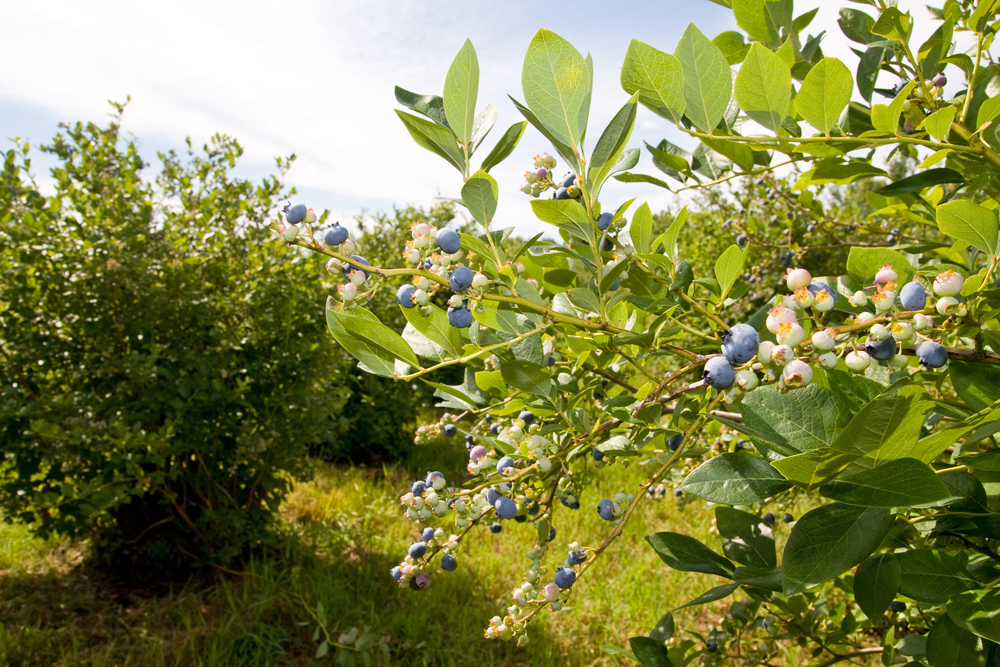
Georgia and Florida Blueberries in Bloom Very Early
By Frank Giles The early blueberry season was highlighted during last weekend’s Southeast Regional Fruit & Vegetable Conference in Savannah, Georgia. One topic kept trending for growers in attendance, too many blooms, way too early. Some growers are reporting up to 30% bloom in Georgia. That makes for a challenging winter for producers hoping to avoid hard freezes as the …
Muscadine Freshness: How Do We Get to Eight Weeks?
By Clint Thompson Muscadines are already a valuable commodity in North Carolina. If N.C. State researchers can determine how to extend their freshness, the crop’s value would really shine, says Penelope Perkins-Veazie, professor in horticulture science at N. C. State. “Normally, a fresh market seeded muscadine will easily last four weeks with low temperature storage. We hold them close to …
New Normal? Florida Tomato Producers Using Non-Wooden Stakes
By Clint Thompson The ongoing supply chain crisis forced many Florida tomato producers to consider non-wooden stakes for their plants this year. Gene McAvoy, University of Florida/IFAS Regional Vegetable Extension Agent IV Emeritus, said growers have said they are more expensive, but they are available. “This whole supply chain thing, wooden stakes are coming out of Central America and South …
Few Slots Remain Open for Executive Farm Management Program
By Frank Giles The Executive Farm Management program, offered by North Carolina (N.C.) State Extension, Clemson Cooperative Extension, East Carolina University College of Business and University of Georgia Cooperative Extension, is set to begin on Tuesday, Jan. 18. Blake Brown, an Extension economist with N.C. State, said there’s still time to sign up for the program. Interested growers should act …
2022 SE Regional Conference Event Helps Producers Move Forward
The Southeast Regional Fruit and Vegetable Conference was just what the doctor ordered for growers yearning to reconnect with fellow farmers and look ahead to the upcoming season. “We are pleased with the continued attendance for this event,” said Drew Echols, Georgia Fruit and Vegetable Growers Association (GFVGA) president. “After our virtual event in 2021, it was encouraging to see our …
Alabama Extension Offering Peach Insect, Disease Management Chart
Alabama Extension is offering a Peach Insect and Disease Management Chart for peach producers. The tool is a resource growers can carry with them and help manage insects during certain tree cycles. It includes the most common insect pests, including scale, European red mite, lesser peachtree borer and thrips. It also includes what management options growers have for prevention of …
Harvests, Sanitation Key to Preventing Yeast Rot in Blueberries
By Clint Thompson Timely harvests and sanitation practices are two ways blueberry growers can avoid yeast rot becoming a major problem in 2022. The disease devastated South Georgia’s rabbiteye blueberries in 2020. Phil Harmon, professor and Extension plant pathologist at the University of Florida, says there’s not a viable chemical option for farmers to implement. Management will have to involve …
Hops Future in North Carolina? N.C. State Researcher Optimistic
By Clint Thompson The potential of new high-yielding hops varieties has N.C. State Associate Professor and Extension specialist Jeanine Davis optimistic about the crop’s future in North Carolina. “The growers are very excited because these yields are as high, and in some cases, higher than yields we’re often seeing in say Michigan and New York,” Davis said. “I think if …
Better Now Than Later: Vidalia Onions Should Recover After Wind Damage
By Clint Thompson High wind speeds a week ago bruised some of Georgia’s Vidalia onion plants. Fortunately, it happened now as opposed to two months later closer to harvest. That’s the feeling shared by Chris Tyson, University of Georgia Extension Area Onion Agent at the Vidalia Onion & Vegetable Research Center in Lyons, Georgia. “That bruising where the onions got …