









AUBURN UNIVERSITY, Ala. — One of the most destructive pests of crops in Alabama roam 365 days per year. Feral hogs will damage food plots and a myriad of other natural resources. Alabama Feral Swine Control Program The Alabama Soil and Water Conservation Committee recently launched a three-year program to help farmers remove wild pigs from their property. The Alabama …
Thrips, Thrips, Thrips! Populations Oscillate in South Florida Fields
According to UF/IFAS, Asian bean thrips (ABT) populations continue to swing back and forth across the South Florida region. While flower thrips are the predominant species north of Miami-Dade, a few locations still are reporting ABT at the dominant species. ABT populations ranged from 0.2 to 0.7 per bloom in southeastern Hendry County. Populations were reduced where records of 10 …
Florida Legislator: House Bill 1601 a Dangerous Piece of Legislation
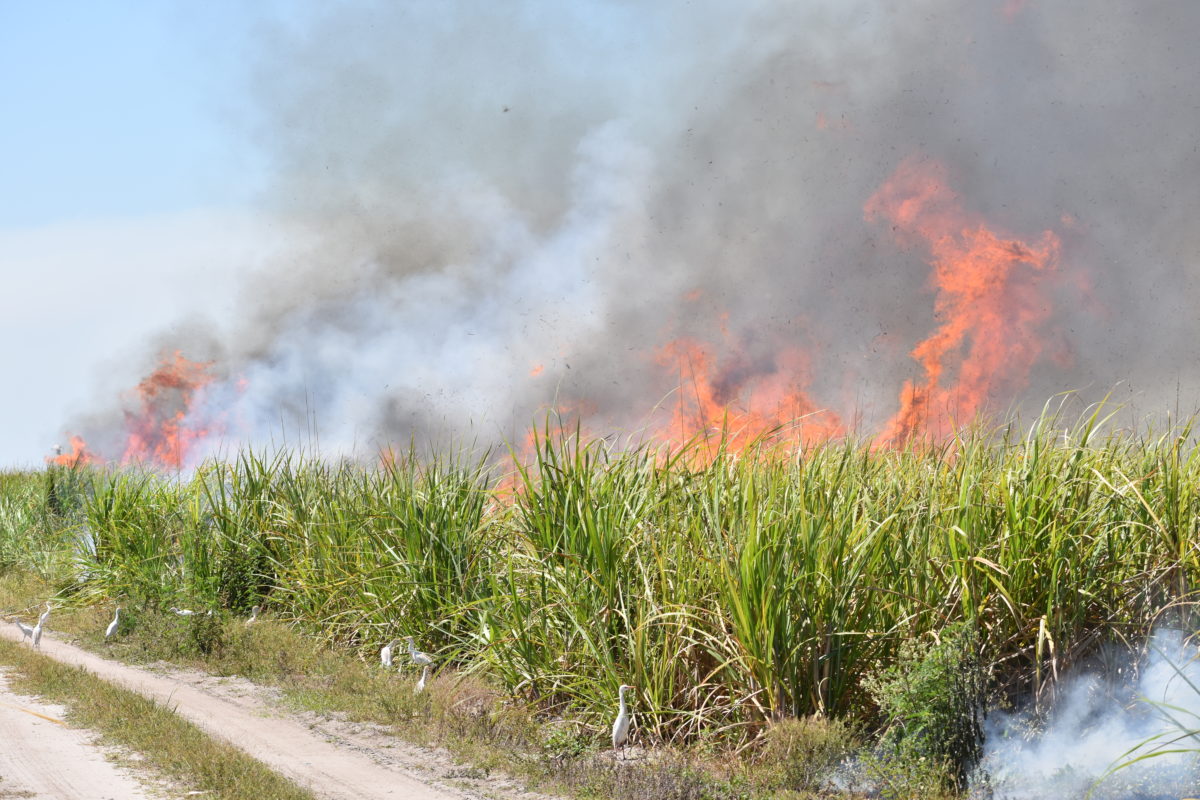
One Florida state legislator deems House Bill 1601 a “dangerous piece of legislation.” Another accuses “Big Sugar” of attempting to “change the rules” in the middle of the game. The bill that is likely to see the House in the next couple of weeks has drawn the ire of Florida State Representatives Anna Eskamani and Omari Hardy. Also known as …
Voice of Leadership: Congressman Scott Sounds Off on Mexican Imports
How can you stay in business by selling a commodity for less than the inputs required to produce it? While it may sound like simple economics, it’s a financial game that’s just not adding up for many Southeast vegetable and specialty crop producers? What’s the ‘X’ factor? Imports from foreign countries like Mexico, Peru and Chile. If they continue to …
Muscadine Grape: Key to Sustainable Florida Viticulture
By Manjul Dutt and Ali Sarkhosh Native to Florida and the southeastern United States, the muscadine grape (Vitis rotundifolia) is a lesser known relative of the European grape (descended from Vitis vinifera) that is popular worldwide for fruit consumption and wine production. A related species (Vitis munsoniana/Vitis rotundifolia var. munsoniana) is commonly present in the central and southern parts of …
Narrow Escape: North Florida Watermelons Dodge Significant Frost Damage
Watermelon farmers in Northeast Florida escaped significant damage this weekend during frost and prolonged cold temperatures, believes Bob Hochmuth, UF/IFAS Regional Specialized Extension agent in Live Oak, Florida. “The way that I characterize it is we escaped narrowly. I think if we had another degree or two colder or if the event had been a couple of hours longer, any …
Making Sense of Biologicals: Crop Optimization With Seaweed
Sometimes vegetable and specialty crop growers must think outside the box to remain sustainable amid high input costs and devastating diseases. What if seaweed could be used to aid in the quality of strawberries, bell peppers or tomatoes? Seaweed is a biostimulant that is part of the biological crop protection products that vegetable and specialty crop producers are increasingly using …
Decreased Production: Georgia Hemp Acres Expected to Decrease in 2021
Georgia’s hemp production is expected to decrease in 2021. Tim Coolong, associate professor in the UGA College of Agricultural and Environmental Sciences, believes there are various factors that will contribute to hemp acreage being down compared to last season. “I think a lot of growers are going more towards, kind of, I’ll say smokable flower. It’s more of a boutique …
What’s the Impact? Florida’s Food Supply Chain Industries Asked to Respond to COVID Survey
By: Kirsten Romaguera, 352-294-3313, kromaguera@ufl.edu A survey aimed to gauge impact of the coronavirus pandemic on the food supply chain will close on April 11. A research team from various institutions, including the University of Florida aims to assess the impact of the pandemic on food and agricultural systems and to develop strategies for coping with future crises. The project …
ABT Infestations Continue in South Florida
South Florida bean producers continue to contend with Asian bean thrips (ABT) populations. According to the University of Florida/IFAS, populations vary from farm to farm and planting to planting. In southeastern Hendry County, populations averaged 0.1 ABT per bud and 0.2 to 0.5 ABT per bloom. Even the older plantings had reached counts totaling 2.2 ABT per bloom. Because of …