









Tallahassee, Fla. – Florida Commissioner of Agriculture Nikki Fried submitted written testimony to the U.S. Senate Committee on Agriculture, Nutrition, and Forestry Subcommittee on Commodities, Risk Management, and Trade, urging Congress to address unfair foreign trade practices causing decades-long harm to Florida farmers and the lack of protections for the domestic seasonal produce industry. “Our state’s fruit and vegetable farming …
Vegetable Disease Update in South Georgia
By Clint Thompson Fruit and vegetable season is in full swing across the South Georgia region. Watermelons, a popular crop produced in the area, are currently being harvested. Ty Torrance, University of Georgia Cooperative Extension vegetable agent for Colquitt, Tift and Worth counties, talks about production and the lack of disease pressure growers encountered this year. “There have been some …
Senate Agriculture Subcommittee on Commodities, Risk Management and Trade
Sen. Warnock’s Prepared Opening Statement for Today’s Hearing The Senate Agriculture Subcommittee on Commodities, Risk Management and Trade will hold a hearing today at 11 a.m. U.S. Senator Raphael Warnock (GA) chairs the subcommittee. He prepared an opening statement: “Today’s hearing, titled ‘Agricultural Trade: Priorities and Issues Facing America’s Farmers,’ is an opportunity for members of this Subcommittee to hear …
Managing Phytophthora Blight on Pepper
Phytophthora blight disease on pepper and tomato has been observed in South Carolina vegetable fields, according to Clemson plant pathologist Tony Keinath and Extension agent Andy Rollins in The South Carolina Grower. Heavy rainfall in the Upstate from May 23 to May 26 led to the disease emergence after June 1. The saturated soils provided an ideal environment for oospores …
In-Depth Scouting Needed to Manage Insect Pests
By Clint Thompson More in-depth scouting is required by Alabama specialty crop producers hoping to maintain insect pests this summer season. It is not enough for growers to survey their crops by just looking at the plants. They need to examine the plants more closely to understand the significance of any impact. Ayanava Majumdar, Extension professor in entomology and plant …
Field Surveys for Resistance-Breaking Viruses in Tomatoes
By Ozgur Batuman and Salih Yilmaz Florida is the leading state in the United States for the production of fresh market tomatoes. In recent years, the emergence of novel tomato-infecting virus species and resistance-breaking variants worldwide has raised concern for the tomato industry. More than 300 virus and virus-like pathogens have been reported to infect tomatoes, which collectively limits their …
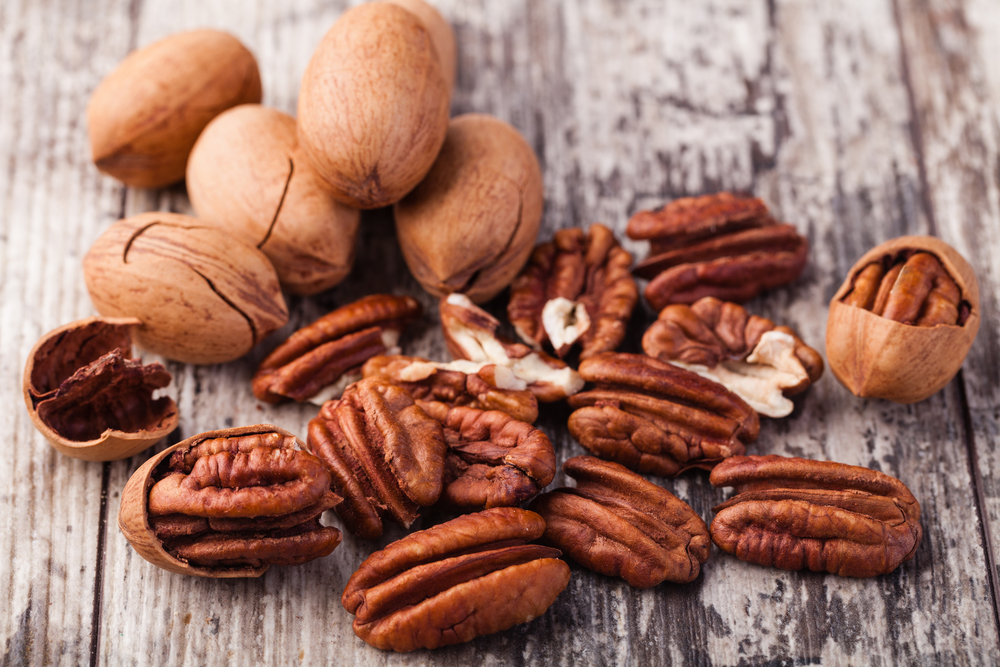
Point of Emphasis: Pecan Leader Stresses Tariff Reduction into India
By Clint Thompson One of the National Pecan Federation’s main points of emphasis was highlighted by the Georgia Pecan Growers Association when a U.S. senator visited the state last week. Senator Jon Ossoff’s (D-GA) visit to South Georgia allowed Samantha McLeod, executive director of the Georgia Pecan Growers Association, to stress the importance of reducing import tariffs into India. “One …
Storms’ Impact on Blueberries
By Clint Thompson Last weekend’s heavy rains in South Florida reminds the state’s blueberry producers the vulnerability of their crop during hurricane season. The combination of strong winds and prolonged rain showers provide a threat to blueberries, says Doug Phillips, University of Florida Institute of Food and Agricultural Sciences (UF/IFAS) blueberry Extension coordinator. “It depends on whether we get wind, …
Pecan Industry Leader Cautions Against Potential Surge in Scab Disease This Summer
By Clint Thompson Hot and dry spring weather conditions in the Southeast meant minimal scab disease pressure for pecan producers. But growers need to be mindful of a potential disease surge if rain persists this summer in the region. Lenny Wells, University of Georgia Extension pecan specialist, cautions producers about the potential impact that scab disease can have at this …
What’s Happening? Clemson Extension Agents Provide Weekly Crop Updates
Clemson Extension agents provide crop updates in The South Carolina Grower this week about the status of various crops being produced throughout the state. Coastal Region Rob Last reports, “Insect and disease activity is increasing in the area across a broad range of crops. In cucurbits, we are seeing powdery mildew and gummy stem blight in watermelon. Remember to keep …